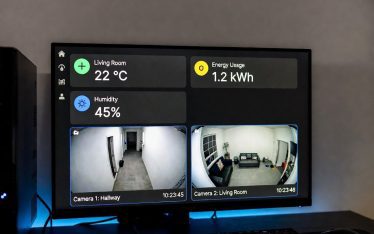

In 2026, enterprise technology has transitioned from speculative AI adoption to industrial-scale deployment. The narrative has shifted from “what AI can do” to “what AI delivers,” as organizations move beyond fragmented pilots to build a mission-critical backbone where software excellence directly dictates the bottom line.
In this outlook, we explore how these macro-trends are redefining the competitive landscape across sectors where high-performance software development has become the ultimate differentiator.
What Defines the 2026 Technology Landscape?
The 2026 technology landscape is defined by the shift to software-defined, AI-driven systems built around intelligence, autonomy, and trust. Across industries, software is no longer a supporting layer – it is the primary source of product differentiation and business value.
Key characteristics of the 2026 landscape include:
- Edge and On-Device AI: Intelligence is moving closer to where data is generated, enabling real-time decision-making, lower latency, improved reliability, and privacy-by-design architectures.
- Software-Defined Products: Features are delivered continuously through software updates, subscriptions, and AI-powered personalization rather than fixed hardware configurations.
- Trust and Compliance as Core Requirements: Security, privacy, and regulatory compliance (e.g., GDPR, HIPAA, automotive safety standards) are embedded into system design, not added later.
- Interoperability and Open Standards: Adoption increasingly depends on compatibility across ecosystems, protocols, and platforms rather than proprietary lock-in.
- Energy-Efficient Software: Sustainability is driven by optimized firmware, intelligent power management, and resource-aware algorithms.
- Autonomous and Agentic Systems: AI systems are evolving from assistive tools to autonomous agents capable of acting, adapting, and optimizing workflows without constant human input.
Summary:
In 2026, competitive advantage comes from building secure, interoperable, and intelligent software-centric systems that scale across devices, platforms, and industries.
Consumer Electronics
Consumer electronics have transitioned from passive tools to proactive digital companions driven by on-device NPU-accelerated AI and circular design.
This shift toward the “Intelligence of Things” is already reflected in market dynamics, with global consumer electronics revenue projected to exceed $1.2 trillion by late 2026. Growth is largely fueled by the replacement cycle for AI-enabled PCs and smartphones, where dedicated Neural Processing Units (NPUs) have become standard hardware rather than premium add-ons.
Software & Firmware Trends Powering Intelligent Devices
| Trend / Technology | Strategic Impact & ROI | Implementation Challenge |
| Agentic AI Workflows | Autonomous agents move from “chatting” to “doing,” automating end-to-end B2B processes. | Governance: Managing agent permissions and ensuring human-in-the-loop safety. |
| Physical AI & Edge Vision | Real-world machines (robots/cobots) sense and react to millisecond defects with 99.9% accuracy. | Compute Density: Balancing high-performance NPU needs with thermal/battery limits. |
| On-Device / TinyML | Zero-latency processing for medical and industrial devices; 100% data privacy. | Optimization: Compressing complex models to fit on ultra-low-power microcontrollers. |
| Zero-Trust Firmware | Built-in “Roots of Trust” that meet the 2026 EU Cyber Resilience Act reporting standards. | Legacy Debt: Retrofitting security-by-design into older, existing hardware architectures. |
| Sustainability (Green Code) | Algorithmic efficiency reduces cloud/compute costs and meets mandatory carbon-reporting KPIs. | Measurement: Difficulty in quantifying the exact carbon footprint of specific code blocks. |
Key Takeaway: Success in 2026 requires balancing high intelligence with zero latency. Advanced features are worthless if they compromise the user’s privacy or battery longevity.
Gaming & eSports
Gaming in 2026 is defined by the collapse of traditional platform barriers and the rise of generative AI-driven, living worlds. This evolution is mirrored in massive market momentum: the global gaming industry is on track to reach $316.4 billion by 2026, expanding at a 9.4% CAGR.
The most significant shift is the dominance of User-Generated Content (UGC) ecosystems; platforms like Roblox and Fortnite Creative are no longer just games but social infrastructures. Roblox alone is projected to reach over 150 million daily active users (DAUs) by late 2026, with nearly 45% of its user base now over the age of 17, signaling a move toward “adult” metaverse utility.
Software Innovations Shaping Next-Generation Gameplay
| Trend / Technology | 2026 Business Impact | Critical Implementation Challenge |
| Generative AI NPCs | LLM-integrated logic allows NPCs to have persistent memory and unscripted dialogue, increasing retention by 25%. | Latency & Sync: Maintaining low-latency real-time inference in multiplayer environments. |
| UGC Ecosystems | Platforms like Roblox and Fortnite exceed $1.5B in annual payouts, turning players into co-developers. | Curation & Safety: Scaling automated AI moderation while preserving creative freedom. |
| TMR Sensor Tech | Quantum-based sensor tech in controllers eliminates “stick drift” permanently, reducing warranty claims. | Firmware Precision: Developing high-polling rate firmware to translate quantum magnetic shifts. |
| Cloud-Native Distribution | Games launch instantly via social links; mobile-first cloud gaming now commands 36% market share. | Edge Optimization: Orchestrating global server networks to maintain “zero-lag” experiences. |
Key Takeaway: The “Platform War” is over; the “Experience War” has begun. Success in 2026 depends on breaking hardware silos through seamless cross-play and utilizing AI not just for better graphics, but for deep narrative intimacy where games adapt to the player’s unique history.
IoT & Smart Home
The smart home has evolved from simple automation to true anticipation – predicting user needs across climate control, security, and energy management. This functional leap has pushed the global Smart Home market toward $213 billion by 2026, accelerated by Matter-based standardization. As a result, device interoperability across major ecosystems has increased by roughly 30%, removing long-standing adoption barriers.
Embedded Software Trends Enabling Anticipatory Homes
| Trend / Technology | 2026 Business Impact | Critical Implementation Challenge |
| Ambient Sensing (UWB) | Room-level user tracking without cameras allows environments to adapt without touch or voice triggers. | Privacy Assurance: Ensuring localized processing so room-tracking data never leaves the home. |
| Sovereign Cloud 3.0 | Industry-specific clouds ensure 100% data sovereignty and localized compliance for sensitive IoT data. | Interoperability: Preventing “vendor lock-in” while utilizing specialized cloud features. |
| Regulatory Trust Stacks | Mandatory reporting for the EU AI Act is built directly into the device firmware. | Legacy Debt: Retrofitting “Security-by-Design” into existing hardware life-cycles. |
Key Takeaway: Privacy is the ultimate premium feature. Local-first IoT architectures are now a competitive advantage, not a technical preference.
Audio & Video Technology
2026 marks the year of Spatial Equity, where immersive audio and ultra-clear visuals are no longer premium features but baseline expectations. The global Professional AV market is projected to reach $310.38 billion in 2026, fueled by a shift toward hybrid work environments and experiential retail.
Technological displacement is also accelerating: MicroLED displays are rapidly moving into high-end corporate and consumer environments, with the market for these displays expected to grow at a staggering 71.5% CAGR through the end of the decade. This shift is driven by MicroLED’s ability to offer 50% less power consumption than OLED while delivering superior brightness for sunlight-readable interfaces.
Software Trends Defining Immersive Audio-Visual Experiences
| Trend / Technology | 2026 Business Impact | Critical Implementation Challenge |
| AV-over-IP (SDVoE/Dante) | Replaces legacy HDMI/SDI with ethernet, enabling scalable 8K delivery and centralized software control. | Network Orchestration: Ensuring AV traffic doesn’t congest mission-critical IT data on shared “converged” networks. |
| Spatial Hearing AI | Moves beyond simple noise cancellation to Source Separation—isolating individual voices in a crowded room (the “Cocktail Party” problem). | DSP Complexity: Balancing the high computational load of real-time neural separation with low-latency requirements. |
| Bluetooth® Auracast™ | Enables “Assistive Listening” and multi-language broadcasts in public spaces directly to user-owned earbuds. | Ecosystem Fragmentation: Overcoming the “chicken-and-egg” problem of venue hardware vs. older consumer device support. |
| DECT NR+ (Non-Radio) | The first non-cellular 5G tech that allows massive, ultra-reliable wireless audio networks in dense RF environments like stadiums. | Regulatory Awareness: Navigating new global spectrum standards for high-density “private” 5G audio networks. |
| Object-Based Spatial Audio | Audio shifts from “channels” to “objects” that dynamically adapt to the listener’s specific room acoustics and speaker layout. | Content Pipeline: The industry still lacks a unified “write once, play anywhere” format for non-cinema environments. |
Key Takeaway: In 2026, AI and spatial audio have moved from “cool features” to essential tools for meeting equity, ensuring remote participants are no longer second-class citizens in the hybrid workplace.
Healthcare & Wearables
Wearables have crossed the line from wellness gadgets to clinical-grade diagnostic tools, enabling the rapid expansion of the Hospital-at-Home model. This transition aligns with explosive growth in digital health, where healthcare transformation initiatives are expanding at a 21.6% CAGR. Remote monitoring systems alone have already demonstrated a 44% reduction in hospital readmissions.
Software & Embedded Trends Advancing Digital Healthcare
| Trend / Technology | 2026 Business Impact | Critical Implementation Challenge |
| Non-Invasive Biosensors | Enables continuous, needle-free monitoring of glucose, lactate, and cortisol, expanding the “Hospital-at-Home” market to $32B+. | Signal-to-Noise Ratio: Ensuring medical-grade accuracy across diverse skin tones and varying environmental conditions. |
| Human Digital Twins | Virtual patient models allow for in-silico drug testing and surgical simulation, cutting clinical trial timelines by up to 50%. | Data Synchronization: Integrating massive, real-time streams from EHRs and wearables into a single, cohesive simulation. |
| Zero-Trust IoMT Firmware | Mandatory boot-level security and encrypted OTA updates ensure compliance with the EU Cyber Resilience Act (Sept 2026 deadline). | Legacy Compatibility: Securing existing “connected” medical devices that were not originally built with modern security-by-design. |
| Agentic Health Intelligence | Autonomous AI agents act as “Medical Copilots,” triaging symptoms and managing patient follow-up without clinician intervention. | Clinical Trust: Bridging the “black box” gap—ensuring AI decisions are explainable and meet strict FDA/EMA transparency standards. |
| Invisible / Textile Sensors | Integration of medical sensors into smart fabrics (E-textiles) for 24/7 ECG and respiratory monitoring without user friction. | Durability & Washability: Maintaining electrical conductivity and sensor calibration after repeated mechanical stress and laundering. |
Key Takeaway: The industry has moved from tracking to diagnosing. Reliability and medical-grade accuracy are now non-negotiable for market entry.
Automotive Electronics
The Software-Defined Vehicle (SDV) is no longer a concept – it is the new industry baseline, with electronics now accounting for 40%+ of total vehicle cost. This transformation is driving the automotive software market toward $21.8 billion by 2026, fueled largely by EVs, which require three times more code than internal combustion vehicles.
Software Trends Driving the Software-Defined Vehicle
| Trend / Technology | 2026 Business Impact | Critical Implementation Challenge |
| Centralized Zonal Architecture | Replaces 100+ legacy ECUs with a few High-Performance Computers (HPCs), reducing wiring weight by 30kg+ and lowering bill-of-materials. | Complexity Management: Shifting from signal-oriented to Service-Oriented Architecture (SOA) requires a total overhaul of the software stack. |
| AI-Optimized SoCs | Next-gen silicon (NVIDIA Thor, Qualcomm Snapdragon Digital Chassis) enables real-time generative AI for in-car assistants and Level 3+ autonomy. | Thermal & Power Budgets: Balancing massive computational throughput with the limited cooling and battery capacity of an EV. |
| Feature-on-Demand (FoD) | Unlocks new revenue streams via OTA subscriptions for performance boosts, heated seats, or advanced ADAS features post-purchase. | Consumer Acceptance: Navigating the “subscription fatigue” and proving consistent value for features previously considered permanent. |
| V2X (Vehicle-to-Everything) | Nationwide C-V2X rollouts enable vehicles to “see” around corners via infrastructure sensors, reducing urban accidents by up to 30%. | Standardization: Harmonizing communication protocols across different regions and competing automotive ecosystems. |
| Digital Twin Prototyping | Cloud-native “Virtual Vehicles” allow software testing to begin months before physical hardware is available, cutting TTM by 40%. | High-Fidelity Simulation: Ensuring virtual models perfectly replicate real-world sensor physics and edge-case road conditions. |
Key Takeaway: OEMs are now software companies. Brand value is defined by the user experience (UX) of the cockpit and the safety of the firmware.
SaaS (Software as a Service)
By 2026, SaaS growth is increasingly driven by Vertical AI – platforms purpose-built for specific industries rather than generic workflows. This specialization is pushing the SaaS market toward $375.5 billion, with nearly 80% of enterprises expected to deploy agentic AI systems capable of autonomous task execution.
Software Trends Behind Vertical and Agentic SaaS
| Trend / Technology | 2026 Business Impact | Critical Implementation Challenge |
| Agentic AI (SaaS 2.0) | AI moves from “Copilots” to autonomous agents that act, reason, and complete multi-step tasks independently. | Agentic Governance: Developing frameworks to manage hundreds of specialized agents to prevent “automated chaos.” |
| Vertical SaaS 2.0 | Deeply specialized platforms (Legal, Construction, Brewery) offer “compound workflows” that replace entire operational teams. | Niche Saturation: Identifying untapped industry micro-segments where generalist tools fail to provide enough depth. |
| Composable Architecture | Mach-based (Microservices, API-first, Cloud-native, Headless) designs allow for 60% faster digital innovation cycles. | Orchestration Complexity: Managing a “best-of-breed” stack from multiple vendors without creating data silos. |
| Outcome-Based Pricing | A shift from “per-seat” to “per-outcome” or usage-based billing, increasing revenue by 12–18% through value alignment. | Revenue Predictability: Transitioning from stable subscription income to fluctuating, result-driven financial models. |
| Sovereign & Compliant SaaS | Regionalized clouds and built-in “AI Trust Stacks” ensure immediate compliance with the EU AI Act and ISO 42001. | Global Standardization: Maintaining a single codebase while adapting to radically different regional regulatory demands. |
Key Takeaway: One-size-fits-all SaaS is obsolete. Competitive advantage lies in deep industry alignment powered by embedded AI agents.
Industrial & Manufacturing
Industry 5.0 has shifted the focus from pure automation to a seamless collaboration between humans and intelligent machines. This approach is driving the Industrial IoT (IIoT) market toward $191.4 billion by 2026, as manufacturers prioritize resilience and millisecond-level precision.
Precision is the new standard: AI-powered computer vision systems, like the PARADES assistive machines, now detect and measure micro-defects as small as 0.08 mm to 0.6 mm, levels of sensitivity previously impossible without manual microscopic inspection. This level of “Smart Sight” is expected to reduce waste in high-precision electronics manufacturing by up to 30%.
Embedded Software Trends Powering Industry 5.0
| Trend / Technology | 2026 Business Impact | Critical Implementation Challenge |
| Physical AI (Autonomous Robotics) | Humanoid robots and AMRs (Autonomous Mobile Robots) navigate unstructured floors to handle logistics, reducing labor gaps by 22%. | Real-World Edge Cases: Training models to handle unpredictable physical variables without constant safety overrides. |
| Agentic Supply Chains | Autonomous agents negotiate with suppliers and reroute logistics instantly during disruptions, moving from monthly to continuous planning. | Data Quality & Silos: Agentic systems require a foundation of clean, real-time data that legacy ERP systems often cannot provide. |
| Industrial Metaverse (Digital Twins) | Immersive 3D environments allow for “Virtual Commissioning,” reducing physical setup time and factory floor errors by 30–50%. | High-Fidelity Integration: Ensuring the digital twin perfectly mirrors the physical asset’s sensor physics and latency. |
| Generative Design & 3D Printing | AI explores thousands of structural possibilities to create high-performance, lightweight parts produced locally via additive manufacturing. | Material Certification: Meeting rigorous industrial standards for 3D-printed parts in high-stakes sectors like aerospace or energy. |
| Green Tech Manufacturing | “Circular” software models monitor carbon footprints in real-time to comply with rising global tariffs and sustainability mandates. | Granular Tracking: Difficulty in quantifying the exact energy and carbon “cost” of every individual component in a complex assembly. |
Key Takeaway: Resilience is the new KPI. Manufacturers are investing in systems capable of autonomous operation during supply-chain disruptions.
Conclusion: Navigating the Software-First Frontier
The mandate for 2026 is clear: software excellence is the ultimate differentiator. Across every sector – from the diagnostic precision of a wearable to the autonomous logic of a smart factory – hardware has become the vessel for AI-driven foresight. Success no longer comes from keeping pace; it comes from redefining your product as a living, intelligent ecosystem.
4 Keys to Strategic Agility
- Continuous Evolution: Moving from static product launches to “living” platforms maintained via seamless OTA updates.
- Edge-to-Cloud Orchestration: Balancing local processing for instant, private decision-making with cloud power for global scale.
- Trust-Centric Design: Baking zero-trust security and data ethics into the bedrock of your architecture.
- Specialized Collaboration: Partnering with experts to master a tech stack that is now too complex for any single internal team.
In this landscape, the question is no longer if you should modernize, but how fast you can scale. Developex serves as your strategic engineering catalyst. With 20 years of experience and 350+ specialists, we provide the technical depth required to build the medical, gaming, and automotive interfaces of tomorrow.
We bridge the gap between your hardware vision and the high-performance, autonomous software required to lead the market.
Ready to build for 2026 and beyond? Let’s turn your strategy into execution.