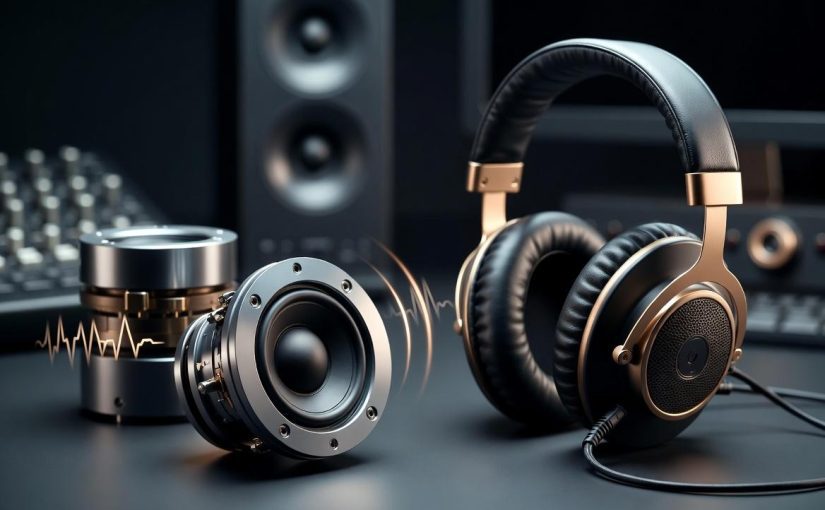
Audio quality has become one of the primary factors shaping how users perceive modern consumer electronics. For premium headphones, speakers, and audio devices, sound is not just one feature among many – it is the core of the product experience. Users expect rich detail, accurate tuning, minimal latency, and seamless integration across platforms. While hardware innovations like advanced transducers and high-quality DACs are vital, they alone cannot deliver a truly differentiated experience in a digital-first world.
The software layer is where much of the real value is realized. Audio drivers determine how raw sound data flows between the operating system, the device firmware, and the hardware components. In many cases, premium brands still rely on default drivers provided by Windows or macOS. These generic drivers are designed to work with thousands of devices, which makes them reliable and universal, but also creates a ceiling for customization, performance tuning, and brand-specific features.
For brands investing heavily in acoustic engineering, this creates a mismatch: high-end hardware paired with basic, one-size-fits-all software. The result is often an audio experience that fails to reflect the product’s true potential or the brand’s elite positioning.
In this post, we will discuss why custom audio drivers are a game-changer for premium audio brands, the technical and business benefits they bring, and what makes them worth the investment.
- 1. What Are Custom Audio Drivers?
- 2. Why Premium Headphones Need Custom Drivers
- 3. Custom vs Generic Audio Drivers: Key Differences
- 4. Core Components of Custom Audio Driver Development
- 5. Windows Audio Driver Development for Brands
- 6. Business and Branding Benefits of Custom Drivers
- 7. Low Latency Audio Driver Development
- 8. Common Challenges in Custom Audio Driver Development
- 9. Choosing the Right Development Partner
- 10. Future Trends in Custom Audio Drivers
- Final Thoughts
1. What Are Custom Audio Drivers?
Custom audio drivers are specialized software components that manage communication between audio hardware and the operating system, optimized for specific devices rather than general compatibility. Unlike the universal drivers that ship with Windows or macOS, these tailored solutions are engineered to unlock the full potential of specific hardware configurations.
At their core, audio drivers serve as translators between three distinct layers:
- The Physical Layer: Includes the actual transducers, digital-to-analog converters, and amplification circuits housed in the device.
- The Operating System Layer: Manages audio streams, routing, and application permissions.
- The Driver Layer: Converts digital audio data into hardware-specific commands while applying real-time processing.
Generic drivers handle this translation using standardized approaches that work adequately for most scenarios but leave performance “on the table.” The key difference with custom drivers lies in device-specific optimizations. A custom driver can directly communicate with proprietary firmware, apply manufacturer-calibrated EQ curves, and coordinate with companion applications without relying on high-level OS APIs that introduce latency. This direct pathway between software and silicon represents the fundamental advantage that makes premium audio experiences possible.
2. Why Premium Headphones Need Custom Drivers
Premium headphones are designed for users who expect more than basic audio playback. These products target listeners who care about sound accuracy, immersive experiences, and consistent performance across different applications and devices. While generic audio drivers can provide functional sound, they rarely meet the technical and experiential requirements of high-end audio products.
One of the main limitations of standard operating system drivers is that they treat most audio devices in a similar way. They apply generic processing models that are optimized for compatibility, not for sound quality or performance. As a result, many hardware capabilities of premium headphones remain underutilized or completely inaccessible at the software level.
Custom audio drivers allow manufacturers to fully leverage their hardware design and deliver features that are essential for premium positioning. In practice, this includes several critical requirements:
- High sound fidelity: preserving detail, dynamic range, and frequency balance without unnecessary resampling or signal degradation.
- Low latency: ensuring minimal delay for gaming, video, and real-time communication use cases.
- Advanced spatial audio: enabling precise sound positioning and immersive audio experiences.
- Optimized active noise cancellation (ANC): fine-tuning noise reduction algorithms for specific microphones and acoustic designs.
- Device-specific equalization (EQ): applying proprietary sound profiles that reflect the brand’s acoustic signature.
- Cross-platform consistency: delivering similar sound quality and feature behavior across Windows, macOS, and sometimes mobile platforms.
From the user’s perspective, these capabilities translate into a premium experience. Instead of relying on third-party apps, users get integrated controls and sound that feels intentionally designed. For example, in professional studio headphones, features like low-latency monitoring become part of the core system rather than a software “add-on,” resulting in the stability that professionals require.
3. Custom vs Generic Audio Drivers: Key Differences
The differences between custom and generic solutions become clear when comparing their performance characteristics and feature access.
| Aspect | Generic Audio Drivers | Custom Audio Drivers |
| Device Optimization | Designed for broad compatibility | Tailored to specific hardware |
| Latency | Moderate (30ms – 100ms+) | Ultra-low (sub-10ms possible) |
| EQ and Tuning | Limited or OS-level only | Full control over sound profiles |
| Spatial Audio | Basic or external support | Integrated proprietary algorithms |
| Feature Access | Restricted by OS APIs | Direct access to hardware features |
| Brand Differentiation | Minimal / Generic | Strong, product-specific |
| User Experience | Standardized | Customized and consistent |
From a technical perspective, one of the most important differences lies in how audio processing is handled within the operating system. On Windows, for example, the audio stack supports Audio Processing Objects (APOs), which allow developers to insert custom processing modules into the audio pipeline. Generic drivers may use only basic APOs or none at all, while custom drivers can implement advanced APO chains for equalization, spatial processing, and noise reduction.
Custom drivers can also bypass certain default system behaviors that introduce latency or limit performance. By carefully managing buffers, thread priorities, and hardware interrupts, developers can achieve significantly lower latency and more predictable timing. This is particularly important for professional audio applications and gaming scenarios where timing accuracy matters.
In essence, generic drivers aim to “just work” for as many devices as possible, while custom drivers aim to make a specific device perform at its best. For premium brands, this difference is not marginal – it directly affects how users perceive sound quality and overall product value.
4. Core Components of Custom Audio Driver Development
Developing a custom audio driver requires integrating several technical layers that work together to deliver high-quality sound from application to hardware.
Kernel-Mode Driver
The kernel-mode driver forms the foundation, operating at the lowest level of the operating system with direct hardware access. This component handles interrupt service routines, DMA buffer management, and real-time scheduling critical for audio processing. For premium audio applications, the kernel driver must maintain consistent timing with jitter under one microsecond to avoid audible artifacts, a requirement that demands careful attention to CPU affinity, thread priorities, and memory allocation strategies.
User-Mode Interface
The user-mode interface provides applications and the operating system with access to driver capabilities without requiring kernel-level permissions. This layer implements the abstractions that audio applications expect, such as presenting the device as an endpoint, exposing supported formats and sample rates, and handling stream setup and teardown. For premium brands, the user-mode component often includes proprietary APIs that companion applications use to access features not available through standard Windows audio interfaces. These might include direct access to DSP parameters, firmware update mechanisms, or device status information like battery levels and sensor data.
Audio Processing Objects (APOs)
APOs represent where much of the differentiation happens in premium audio drivers. These components execute in user mode but insert directly into the audio rendering pipeline, processing every sample that passes through the driver:
- Stream Effect APOs modify audio during playback, implementing features like equalization, room correction, and virtualization
- Mode Effect APOs apply processing based on the audio mode, such as applying different profiles for music versus movies
- Endpoint Effect APOs run regardless of stream state, useful for implementing features like sidetone in headsets.
Each APO type serves specific purposes in the overall audio processing chain, and premium audio drivers typically implement all three to provide comprehensive sound shaping capabilities.
Firmware Interaction Layer
Firmware interaction adds another critical layer for devices with onboard processing capabilities. Modern premium headphones often include DSP chips, sensor arrays for head tracking, and sophisticated power management systems that require coordination with the driver. The driver must communicate with device firmware to configure processing parameters, retrieve telemetry data, and implement features that span the hardware-software boundary. This firmware interface layer must account for USB packet timing, error recovery, and state synchronization to ensure the host driver and device firmware maintain a consistent view of configuration and status.
5. Windows Audio Driver Development for Brands
Windows remains one of the most important platforms for premium audio devices, especially in segments such as gaming, professional audio, and enterprise hardware. For many brands, Windows is the primary environment where users interact with advanced audio features, making Windows audio driver development a critical part of the overall product experience. Unlike generic drivers, custom Windows drivers allow manufacturers to deeply integrate their hardware with the operating system and deliver consistent, high-quality sound across applications.
From a technical perspective, Windows provides a flexible and mature audio architecture that enables advanced customization when used correctly. Key aspects of Windows audio driver development for audio brands include:
- Windows audio stack flexibility (WDM, UAA): Windows supports multiple driver models, including the traditional Windows Driver Model (WDM) and the Universal Audio Architecture (UAA). These frameworks allow developers to build low-level drivers that communicate directly with audio hardware while remaining compatible with modern Windows audio services and APIs.
- APO framework advantages: The Windows Audio Processing Object (APO) framework enables developers to insert custom processing modules directly into the system audio pipeline. This makes it possible to implement proprietary features such as custom EQ, spatial audio, voice enhancement, dynamic range control, and noise reduction at the driver level, without relying on third-party applications.
- Driver signing and certification: Windows requires audio drivers to be digitally signed and often certified through Microsoft’s WHQL driver validation processes. While this adds complexity to development, it ensures system stability, security, and trust. For a comprehensive guide on WHQL testing workflows and optimization strategies, see our detailed certification guide. Properly signed drivers integrate seamlessly with Windows updates and reduce the risk of compatibility issues for end users.
- Latency optimization techniques: Custom Windows drivers allow fine-grained control over buffering, scheduling, and interrupt handling. By optimizing these parameters, developers can significantly reduce audio latency compared to generic drivers. This is especially important for gaming headsets, VR devices, and professional audio equipment where real-time sound feedback is essential.
- Multi-version compatibility: Premium audio brands typically need to support a wide range of Windows versions, from Windows 10 to the latest releases. Custom drivers must be designed and tested to behave consistently across these environments, ensuring that features and performance remain stable regardless of the user’s system configuration.
In practice, successful Windows audio driver development requires a balance between deep system-level optimization and strict compliance with platform standards. Brands must invest not only in feature development, but also in long-term maintenance, testing, and updates to keep drivers compatible with evolving Windows releases.
For premium audio products, this effort pays off in the form of lower latency, better sound quality, and tighter integration with the operating system. Instead of relying on generic system behavior, brands gain full control over how their devices perform in real-world scenarios, which directly impacts user satisfaction and perceived product quality.
6. Business and Branding Benefits of Custom Drivers
The decision to invest in custom drivers is as much a business strategy as it is a technical one. In a saturated market, differentiation is survival. When a user plugs in a headset and sees a beautifully designed control panel with the brand’s logo, it reinforces the “premium” nature of the purchase. It creates a “walled garden” of quality that makes customers more likely to stick with the brand for their next purchase.
| Business Benefit | Description |
| Market Differentiation | Custom features (like AI-based voice clearing) that competitors don’t have. |
| Customer Loyalty | Proprietary software ecosystems make it harder for users to switch brands. |
| Data & Insights | Custom drivers can provide (anonymized) feedback on how users use the hardware. |
| Product Lifecycle | Ability to add new features or fix bugs via software updates without hardware recalls. |
| Perceived Quality | A branded, stable driver leads to better reviews and higher star ratings on retail sites. |
From an ROI perspective, the initial investment in driver development pays off by improving the overall user experience. Custom-developed, professionally maintained drivers reduce potential compatibility issues and ensure consistent performance across different system configurations. This proactive approach helps minimize customer frustration, reduces support burden, and protects brand reputation – all factors that directly contribute to long-term profitability.
7. Low Latency Audio Driver Development
Low latency is one of the most critical performance indicators for modern audio devices, especially in use cases such as gaming, professional audio production, live streaming, and real-time communication. Even small delays between audio input and output can negatively affect user experience, making sound feel disconnected from visual content or user actions. Generic drivers often prioritize stability and compatibility, which introduces additional buffering and processing overhead. Custom audio drivers make it possible to minimize these delays and deliver real-time audio performance.
Key technical strategies for low-latency driver design include:
- Reduced buffer sizes: Smaller audio buffers decrease the amount of time audio data waits before being processed and played back. This directly lowers end-to-end latency, although it requires precise timing control and highly optimized processing logic.
- Real-time thread scheduling: Assigning higher priority to audio processing threads ensures that sound data is handled immediately, even under heavy system load. This prevents audio dropouts and timing inconsistencies in real-time scenarios.
- Hardware interrupt optimization: Efficient handling of hardware interrupts reduces delays between the moment audio data becomes available and when it is processed by the driver. This is especially important for USB and PCI-based audio devices.
- DSP offloading to firmware: Moving complex signal processing tasks to dedicated digital signal processors within the device firmware reduces CPU load and shortens processing chains on the host system.
- CPU usage profiling: Continuous monitoring and optimization of CPU usage helps identify performance bottlenecks and unnecessary processing steps, ensuring that audio processing remains lightweight and predictable.
For premium gaming headsets, studio monitors, and professional audio interfaces, low latency is not just a technical specification but a core part of product value. Custom low-latency audio driver development enables brands to meet the expectations of demanding users who rely on precise, real-time sound feedback for both entertainment and professional workflows.
8. Common Challenges in Custom Audio Driver Development
Hardware compatibility represents one of the most persistent challenges in custom audio driver development, particularly given the diversity of PC configurations in the Windows ecosystem. Drivers must function correctly across different motherboard chipsets, USB controllers, power management implementations, and peripheral combinations. A driver that works flawlessly on Intel systems may exhibit timing issues on AMD platforms due to subtle differences in how USB host controllers handle isochronous transfers. Thorough compatibility testing requires access to representative hardware across the target market, including both current mainstream configurations and legacy systems that users may still operate.
| Challenge Category | Specific Issues | Mitigation Strategies |
| Hardware Compatibility | Motherboard chipset variations, USB controller differences, power management conflicts | Comprehensive test matrices, early access to reference hardware, automated compatibility testing |
| OS Updates | Feature updates changing audio stack behavior, driver API modifications, power management changes | Windows Insider participation, multi-version test environments, rapid response update processes |
| Driver Certification | WHQL requirements conflicting with optimal performance, lengthy certification timelines | Early architecture validation, experienced certification specialists, parallel development tracks |
| Audio Quality Assurance | Subjective quality evaluation, cross-platform consistency, edge case testing | Trained listener panels, objective measurement suites, 300-500 hour comprehensive test protocols |
| Security Requirements | Driver signing mandates, secure boot compatibility, vulnerability scanning | Code signing infrastructure, security-focused code reviews, regular penetration testing |
Operating system updates introduce ongoing compatibility risks that require sustained engineering effort to address. Microsoft releases major Windows feature updates twice annually, each potentially changing audio stack internals, driver loading sequences, or power management behavior. A custom driver that works perfectly on Windows 10 21H2 may experience issues when Windows 11 22H2 modifies how the audio engine handles sample rate conversions. Proactive driver maintenance includes participating in Windows Insider testing programs to identify compatibility issues before public releases, maintaining test matrices that cover multiple OS versions, and establishing update processes that can rapidly address issues discovered in the field.
Quality assurance and testing for audio drivers demands specialized methodologies beyond standard software testing approaches:
- Functional testing verifies correct audio playback across different sample rates, bit depths, and channel configurations
- Performance testing measures latency, CPU usage, and memory consumption under various load conditions
- Stress testing validates behavior during rapid state changes, device disconnections, and system resource constraints
- Audio quality testing requires both objective measurements of frequency response, THD, and signal-to-noise ratio, and subjective evaluation by trained listeners
- Compatibility testing ensures proper operation across diverse hardware configurations and OS versions
Comprehensive testing for a complex custom driver easily requires 300-500 hours of effort, making it a significant component of overall development cost. However, this investment proves essential for delivering the reliability and quality that premium audio customers expect.
9. Choosing the Right Development Partner
Given the complexities involved, most audio brands find that building an in-house driver team is prohibitively expensive and slow. The specialized knowledge required – spanning kernel-level C++ programming, DSP mathematics, and Windows API expertise – is rare. This is why many of the world’s leading audio brands choose to partner with experienced vendors.
Developex brings proven experience in premium audio driver development with a track record of delivering custom driver solutions for multiple audio brands in the premium market segment. Our expertise covers the entire lifecycle audio software development:
- Cross-Platform Driver Development: Creating unified experiences across Windows (WDM/ASIO) and macOS.
- Firmware Integration: Ensuring the driver and the hardware’s internal “brain” are in perfect sync.
- Performance Optimization: Tuning drivers to achieve the lowest possible latency for gaming and pro-audio.
- UI/UX Design: Crafting branded control panels that users love to interact with.
- Rigorous Testing: Utilizing automated and manual testing environments to ensure stability across thousands of hardware configurations.
10. Future Trends in Custom Audio Drivers
The evolution of audio driver technology continues accelerating as new use cases and platform capabilities emerge:
Spatial Audio and Head Tracking Integration
Spatial audio represents the most significant near-term opportunity, with both Windows and macOS now providing operating system-level spatial audio support that custom drivers can leverage and enhance. Premium brands are implementing head tracking integration that adjusts spatial audio positioning based on actual head movement, creating immersive experiences that dramatically improve perceived quality. Custom drivers enable this integration by coordinating between onboard IMU sensors, real-time position tracking, and dynamic audio rendering algorithms that update spatial positioning at frame rates exceeding 100Hz.
Machine Learning for Adaptive Personalization
Machine learning integration in audio processing pipelines offers possibilities for adaptive personalization that goes beyond traditional manual equalization. Custom drivers can implement ML models that learn user preferences over time, automatically adjusting frequency response, dynamic range processing, and spatial rendering based on listening patterns and environment. On-device ML inference for audio processing has become practical with modern CPU capabilities, allowing custom drivers to implement sophisticated adaptive algorithms without cloud dependencies. Brands investing in custom driver development now can architect systems that evolve this capability as ML models improve, creating ongoing differentiation through increasingly personalized audio experiences.
Advanced Wireless Audio Protocols
Wireless audio protocols continue advancing toward lower latency and higher quality, creating opportunities for custom drivers to optimize for emerging standards:
- Bluetooth LE Audio with LC3 codec offers better quality at lower bitrates than existing protocols while reducing latency through improved timing mechanisms
- Codec-specific optimizations enable custom drivers to implement hardware-tailored processing that maximizes quality for each supported format
- Intelligent fallback behavior manages compatibility when devices support different codec sets
- User-configurable quality vs. latency tradeoffs provide control over wireless performance priorities
Cloud-Integrated Audio Processing
Cloud integration for audio processing and content delivery represents a longer-term trend that custom drivers can enable. Imagine drivers that coordinate with cloud services to deliver personalized spatial audio rendering based on ear scan data, or that download optimized processing profiles for specific acoustic environments. While latency constraints limit what processing can move to the cloud, custom drivers can implement hybrid architectures that perform time-critical processing locally while leveraging cloud resources for computationally intensive tasks like room acoustics simulation or personalized HRTF generation.
Final Thoughts
Custom audio drivers have become essential for premium audio brands seeking to differentiate in a market where hardware alone no longer provides sustainable competitive advantage. The gap between generic OS drivers and what discerning customers expect continues to widen, making custom driver development not just beneficial but necessary for brands competing at the premium tier.
The investment delivers measurable returns through enhanced product reviews, premium pricing power, and customer loyalty that translates directly to market share. More importantly, custom drivers establish software ecosystems that create long-term competitive moats competitors cannot easily replicate.
Ready to elevate your audio brand with custom driver development?
Contact Developex to discuss how our proven expertise in premium audio driver solutions can help differentiate your products and accelerate your time to market.