
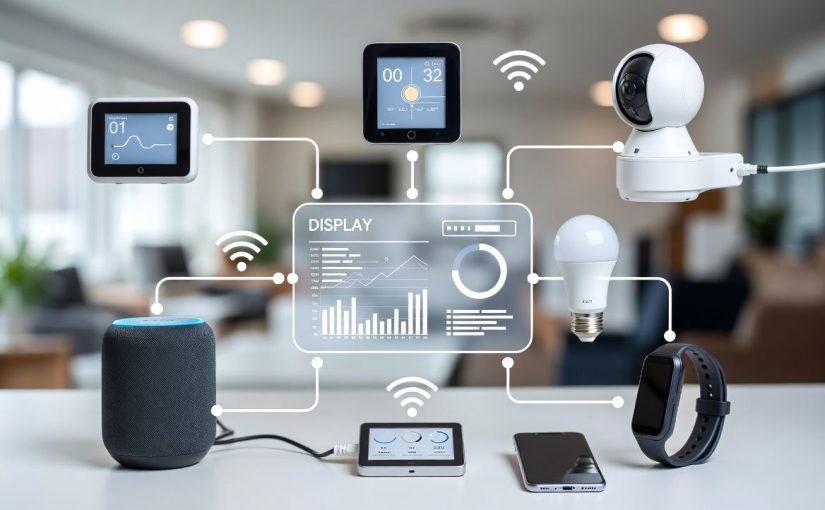
The transition of hardware manufacturers into the digital service space is perhaps best exemplified by the Internet of Things (IoT), where the sale of a physical device marks only the beginning of a complex, ongoing software-driven relationship. While market projections frequently cite trillion-dollar economic impacts, the reality of IoT implementation is often characterized by a significant “adoption gap” where technical complexity and fragmented ecosystems deter users from realizing the full utility of their connected products.
Community portals – structured digital environments that facilitate interaction between users, developers, and brands – have emerged as the critical infrastructure necessary to bridge this gap. By addressing specific technical hurdles, facilitating “social onboarding,” and empowering a specialized class of “power users” to extend device functionality, these portals transform a static piece of hardware into a dynamic, evolving asset within a broader ecosystem.
In this post, we explore how community portals bridge the gap between technical potential and mainstream IoT adoption.
- 1. The IoT Adoption Barrier: Why Smart Devices Still Struggle
- 2. Community Features & Knowledge Flywheels in IoT Adoption
- 3. Technical Architecture for IoT-Specific Community Portals
- 4. The Economic Logic & Metrics of Community Portals in IoT
- 5. Industry-Specific Portal Dynamics
- 6. Future Trajectories: AI, Blockchain, and the Evolution of Portals
- Final Thoughts
1. The IoT Adoption Barrier: Why Smart Devices Still Struggle
To move beyond early adopters and into the mainstream, IoT manufacturers must first address the “complexity tax” that currently burdens the end-user experience. The following sections break down the specific technical, psychological, and operational hurdles that create the adoption gap, alongside the community-driven solutions that resolve them.
1.1 Technical Fragmentation and Interoperability
A primary deterrent is the lack of universal standards. Billions of sensors operate on mismatched protocols (Zigbee, Z-Wave, Matter), leading to a “protocol mismatch” that intimidates mainstream users.
The Community Solution: The portal serves as an informal standardization layer. When official manuals fail to address how a specific regional router interacts with a low-power sensor, community forums provide peer-tested configurations and “crowdsourced troubleshooting” that vendor support often lacks.
1.2 The Trust and Validation Gap
Privacy is the single largest psychological barrier. Consumers fear “vendor abandonment” (where a device becomes a brick if a company closes its servers) and opaque data practices. Furthermore, official marketing rarely accounts for “non-ideal” home environments.
The Community Solution: Peer Validation. Seeing hundreds of users discuss real-world performance – including limitations – provides social proof that marketing cannot buy. Transparent discussions about firmware patches and data handling build long-term confidence.
1.3 Complexity and Ecosystem Lock-In
Choosing an IoT ecosystem feels like a high-stakes, long-term commitment. The fear of being “locked in” to a platform that may become obsolete leads to a “wait and see” mindset.
The Community Solution: Cross-brand Integration Guides. User-generated content often focuses on “procedural” info – how to make Device A talk to Device B via a third-party script – reducing the fear of being trapped in a single manufacturer’s silo.
The table below summarizes the most common adoption barriers in IoT and the specific ways community portals mitigate each of them.
| Barrier Type | Specific Constraint | Adoption Impact | Community Portal Intervention |
| Technical | Protocol Mismatch (Matter/Zigbee) | High integration costs | Crowdsourced Troubleshooting: Peer-tested fixes for non-standard setups. |
| Psychological | The Trust Gap / Privacy | Hesitation to adopt | Social Proof: Transparent peer reviews and real-world performance logs. |
| Operational | Ecosystem Lock-in | “Wait and see” mindset | Interoperability Maps: User-shared “recipes” for cross-brand automation. |
| Regulatory | Compliance Drag (GDPR/HIPAA) | Discourages enterprise use | Knowledge Repositories: Expert-led discussions on practical compliance. |
2. Community Features & Knowledge Flywheels in IoT Adoption
In the traditional support model, knowledge is siloed and reactive. For IoT to scale, it must transition into a decentralized knowledge infrastructure. This shift is powered by a “Knowledge Flywheel” effect: as users interact with specific community features, they generate data and solutions that make the ecosystem more valuable for the next user, creating a self-sustaining cycle of adoption.
2.1 Features That Power the Flywheel
Interactive features turn a passive knowledge base into a living ecosystem. These tools don’t just solve problems; they influence buying behavior by removing the “risk of the unknown.”
- Beta Programs & Feedback Loops: By involving the community in pre-release testing, brands create a class of “early advocates.” When users see their feedback reflected in a firmware update, it signals a responsive brand, significantly increasing their willingness to purchase future devices.
- Community Ambassador Programs: Brands can formalize peer influence. Early access to new products gives ambassadors status, while prospective buyers receive guidance from a “real person” rather than a sales team.
- Transparent Live Execution: Modern IoT systems now employ “Transparent Execution” UIs. By showing the user exactly what an AI or automated agent is doing in real-time (e.g., “Adjusting HVAC because occupancy is < 10%”), the portal builds the know-how and confidence necessary for users to trust autonomous systems.
2.2 Peer-to-Peer (P2P) Support: Scaling the Network
The traditional one-on-one support model is insufficient for modern IoT deployments. Every misconfigured device potentially affects the security and resilience of the global network. Consequently, the community portal evolves into a decentralized infrastructure:
- Reducing Cognitive Load: When a user encounters a configuration error, they are more likely to find a solution in a peer-led forum than through a corporate ticket. Community members often operate in the same “non-ideal” environments (poor Wi-Fi, mismatched routers) as the newcomer.
- The Acceleration Phase: As developers create integrations or “recipes” on the portal, they attract more users. This leads to more real-world data and feedback, which in turn attracts more developers. This cross-side network effect is what turns a hardware brand into a platform.
- Trust Through Transparency: The provision of “receipts” or logs for automated tasks within the portal empowers users to verify results. This transition from passive ownership to active supervision is fundamental to the successful adoption of complex, autonomous IoT systems.
3. Technical Architecture for IoT-Specific Community Portals
Building an effective IoT community portal requires specialized infrastructure. Unlike generic forums, an IoT portal must connect users to their devices, provide real-time diagnostics, and ensure strong privacy protections. At its core, the architecture has several key components that work together to reduce adoption friction and increase user confidence.
| Component | Purpose | Key Features |
| Device Registry | Links users to their devices | Automatic detection, compatibility matching, personalized content |
| Diagnostic Integration | Supports troubleshooting | Remote log collection, firmware tracking, connectivity checks |
| Privacy Layer | Protects sensitive data | Anonymization, granular permissions, data retention policies |
| API Gateway | Connects devices to community | REST endpoints, WebSocket support, secure authentication |
| Mobile-First Interface | Seamless access | Native iOS/Android apps, responsive web, offline caching |
These components enable several adoption-focused capabilities:
- Device-aware personalization: By linking users to their specific devices and firmware versions, the portal can surface relevant guides, discussions, and troubleshooting threads automatically. Compatibility issues are flagged, and success stories from similar setups are highlighted.
- Visual integration maps: Users can explore diagrams showing how others combine devices – motion sensors, smart bulbs, locks – into functional ecosystems. This demystifies complex setups and inspires confidence.
- Live diagnostics and crowdsourced insights: Real-time status updates, bug tracking, and community-shared fixes accelerate problem identification and reduce support load.
- Privacy-first data sharing: Users choose what information to share, while anonymized statistics inform others – for example, “73% of users report Wi-Fi improvements after firmware 2.4” – without exposing personal details.
By combining these elements, an IoT community portal moves beyond discussion forums to become a practical tool that supports adoption, troubleshooting, and long-term engagement.
4. The Economic Logic & Metrics of Community Portals in IoT
While the previous post explored the ROI of community platforms in a broad consumer electronics context, the economic impact of community portals specifically for IoT adoption is driven by the reduction of technical debt and the acceleration of the “Time-to-Utility” (TtU) metric.
4.1 The Strategic ROI: Reducing Technical Debt
In IoT, technical debt refers to the long-term costs of supporting devices with non-standard protocols or poor initial UX. Community portals act as a proactive “insurance policy” against these overheads:
- Co-Creation as Informal R&D: By involving users in beta testing and open feedback loops, brands identify integration failures before mass deployment. This reduces the risk of expensive product recalls or failures – a factor that has historically derailed a large share of IoT projects.
- Support Deflection at Scale: Every public solution in a community thread becomes a permanent, searchable asset. This transforms support from a linear cost (hiring more staff as you sell more units) into a scalable, self-healing ecosystem.
4.2 The Metric-Driven Proof: Impact on the Buyer’s Journey
Measuring the impact of a community portal on IoT adoption requires tracking how community engagement influences real user behavior across the full buyer journey. Unlike traditional marketing metrics, community impact is reflected in conversion quality, decision speed, ecosystem growth, and long-term trust.
According to community marketing statistics, community portals are not just engagement tools but measurable growth infrastructure. They accelerate purchasing decisions, increase ecosystem investment, improve retention, and strengthen trust – all of which directly influence IoT adoption at scale.
| Metric Category | What It Measures | Impact on IoT Adoption |
| Conversion Rate Lift | Purchase likelihood of community-exposed users. | 2–4× higher conversion; peer validation removes pre-purchase anxiety. |
| Time-to-Purchase | Speed from initial research to checkout. | 40–60% faster cycles; community content reduces “decision paralysis.” |
| Device Expansion Rate | Number of additional devices purchased. | 3–5 devices/year vs. <1 for isolated users; users feel confident scaling. |
| Customer Lifetime Value | Total spend over the relationship. | 150–300% higher CLV; trust drives long-term subscription retention. |
| Support Deflection | Issues solved by peers vs. help desk. | 20–40% fewer tickets; community handles common setup hurdles. |
4.3 Accelerating “Time-to-Utility” (TtU)
The true profitability of an IoT device is realized when the user moves from “unboxing” to “daily utility” as fast as possible. Community portals accelerate this ROI by helping users discover “Rising Star” use cases.
For example, a customer may buy a smart plug for a lamp, but the community shows them how to use it for automated energy monitoring or appliance safety. Between 2021 and 2024, such “secondary use-case adoption” increased by 35 percentage points in community-led ecosystems, significantly increasing the value derived from the initial hardware investment without requiring a new sale.
5. Industry-Specific Portal Dynamics
The role of community portals in driving adoption varies significantly across different sectors, reflecting the unique technical and social requirements of each industry.
5.1 Smart Cities and Civic Engagement
In the context of smart cities, community portals are essential for fostering civic engagement and ensuring that technological innovation is balanced with resident needs. IoT-enabled smart cities manage municipal services like waste management, energy use, and traffic flow through a real-time overview of urban activity.
Portals allow residents to participate in this process – for example, by sharing real-time data from their own smart home sensors to help monitor air quality or local traffic congestion. This “citizen-centric” design transforms the smart city from a top-down surveillance project into a collaborative ecosystem where residents feel a sense of ownership over their urban environment.
5.2 Industrial IoT (IIoT) and Process Automation
For industrial organizations, the primary driver of IoT adoption is ROI, which is often achieved through process automation and predictive maintenance. Community portals for IIoT often revolve around open-source platforms like OpenRemote or Odoo, which allow businesses to customize their software to fit unique processes without the high cost of proprietary ERP systems. These portals facilitate the sharing of “best-practice” automation triggers and custom reporting dashboards, helping organizations streamline production and reduce downtime through real-time asset monitoring.
5.3 Healthcare IoT (HIoT) and Data Sovereignty
In healthcare, adoption is contingent upon patient privacy and regulatory compliance. Community portals here serve as critical forums for discussing the integration of legacy medical systems with modern IoT devices. They allow healthcare providers to share strategies for multi-factor authentication (MFA) and data encryption that protect patient health information (PHI) while ensuring that data remains accessible to authorized medical personnel in emergencies. Furthermore, community-driven research into HIoT has led to the development of innovative e-health systems that offer faster patient care and reduced operational costs through real-time monitoring of chronic conditions.
6. Future Trajectories: AI, Blockchain, and the Evolution of Portals
The evolution of community portals is increasingly shaped by technological convergence, where AI and blockchain are used to solve the persistent challenges of privacy, security, and the “cold-start” problem of network effects.
6.1 AI-Driven Personalization and Guided Onboarding
Platforms are increasingly using artificial intelligence to tailor the community experience, increasing “stickiness” and perceived value. AI-assisted matching can analyze large datasets to recommend specific community-developed scripts or tutorials to users based on their device population and historical usage patterns. Furthermore, AI can be used to “flatten” the learning curve for new users by providing pre-built task templates that embody the know-how of expert users, making advanced automation accessible to everyone.
6.2 Decentralized Governance and Blockchain Integration
The future of IoT identity management and data sovereignty may lie in blockchain-based decentralized platforms. Consortium blockchains can provide a decentralized onboarding mechanism that enhances transparency and security for smart home and industrial architectures.
In these systems, community portals would transition from being brand-owned forums to being the governing bodies of a decentralized network, where users hold private keys and manage their own data reputation records. This approach not only respects user privacy but also provides a tamperproof mechanism for managing device warranties, key revocations, and insurance claims based on actual device performance data.
6.3 Predictive Sustainability and Green IoT
As sustainability becomes a primary driver of corporate strategy, community portals will play a central role in optimizing the environmental impact of IoT. Community-driven energy monitoring use cases help organizations track individual assets’ consumption in real-time, allowing for generation optimization and predictive load balancing.
By sharing these “green” configurations and automation scripts, community portals enable a collaborative approach to emissions reduction and resource management, aligning technological innovation with global sustainability goals.
Final Thoughts
The evidence suggests that community portals are the operational backbone of successful IoT device adoption. For manufacturers, these platforms represent a shift from a product-centric to a service-centric business model where the community provides the “informal R&D” necessary to keep products relevant in a rapidly changing technical landscape. For users, the portal is a source of both technical resilience and social belonging, transforming the often-isolating experience of managing a complex digital environment into a collaborative endeavor.
The “smartness” of the Internet of Things is not an inherent property of the hardware; it is a collaborative output of the community that supports it. By providing the infrastructure for peer-to-peer support, custom-developed functionality, and collective security, community portals ensure that IoT devices move beyond being mere technological curiosities to becoming indispensable components of modern life and industry.
Organizations that fail to cultivate these digital commons will find themselves burdened by technical debt and user churn, while those that embrace the community-driven model will unlock the trillion-dollar potential of the connected future. The role of the community portal is, therefore, not just to support the device, but to sustain the entire ecosystem in which that device lives.
How Developex Enables the Connected Future
At Developex, we specialize in scalable IoT ecosystems development – from firmware and device connectivity to community platforms, APIs, and privacy-first cloud infrastructure. We help hardware companies evolve into full digital service platforms with communities at their core.
Ready to bridge the adoption gap for your product? Let’s build the ecosystem your users deserve.