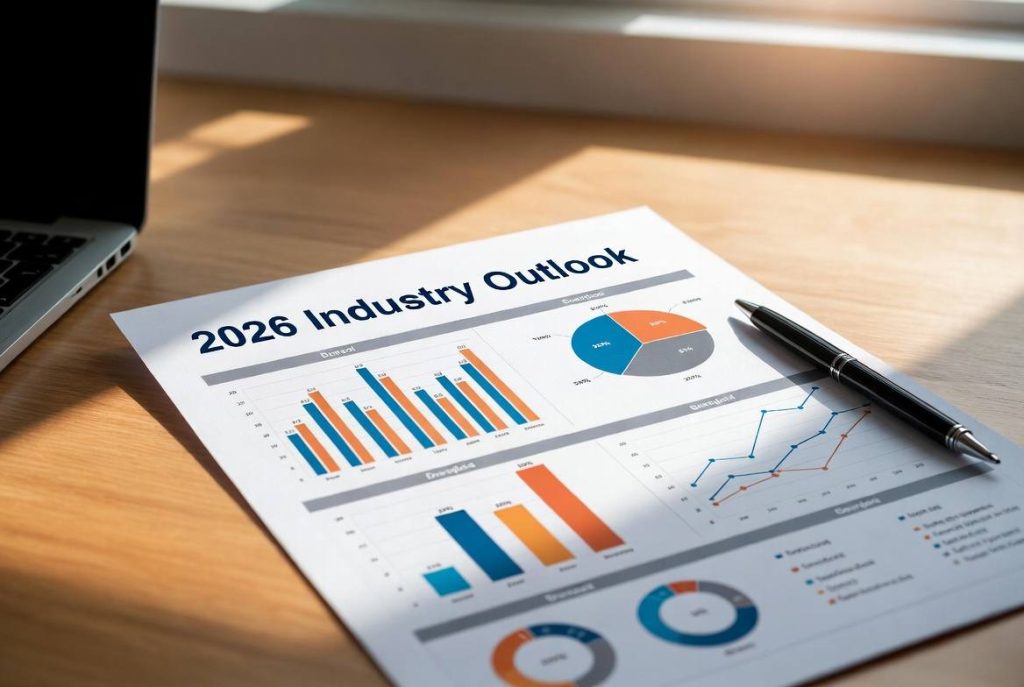
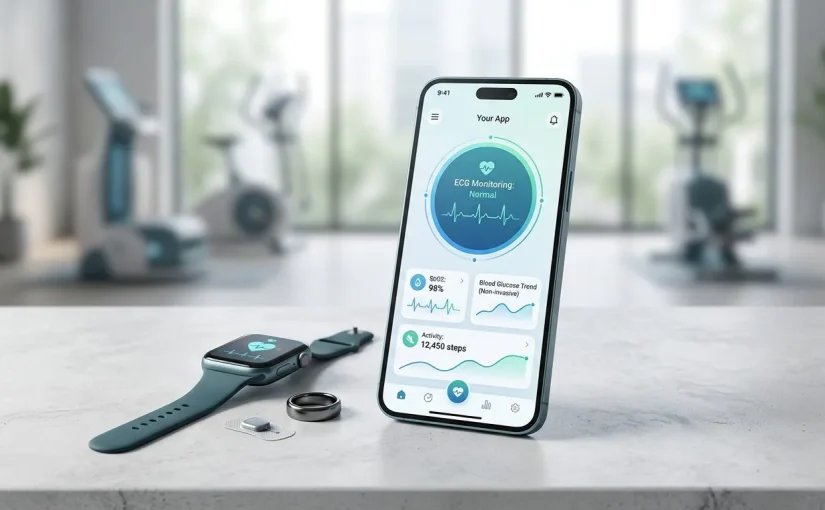
Health and wellness apps have moved from a niche market segment to a core pillar of healthcare delivery. The global mHealth apps market was valued at approximately $40–43 billion in 2025 and is projected to reach $45–46 billion in 2026, growing at a CAGR of around 12–15% through the end of the decade. Wearable device shipments are expected to hit 611.5 million units in 2025, and the number of health-focused mobile applications continues to climb across both the App Store and Google Play. In short: patients are using digital tools every day to manage their health — and the market is responding with unprecedented speed.
But growth alone doesn’t mean success. A July 2025 Harris Poll survey of 2,000 U.S. smartphone users found that 60% already use digital health tools regularly, yet three-quarters say they want more personalization, and nearly 64% of health app users report frustrating experiences — most commonly citing inaccurate data and lack of cross-app integration. The message is clear: users have adopted digital health tools, but most apps are still falling short of real expectations. More features do not automatically mean better outcomes. The apps that win in 2026 are those that understand what patients genuinely need.
In this post, we will discuss what patients actually want from their health apps, which feature categories separate high-retention products from forgettable ones, and what technical and design decisions make the biggest difference.
The State of mHealth in 2026: Why Features Matter More Than Ever
The mHealth landscape in 2026 is fundamentally different from what it was five years ago. The post-pandemic shift toward remote care has become permanent. Patients who experienced telehealth for the first time between 2020 and 2022 are now sophisticated digital health consumers — they compare apps, switch platforms, and abandon tools that waste their time.
Several forces are converging to raise the bar. First, AI has moved from experimental to expected. Platforms like WHOOP Coach, Fitbit’s Gemini-powered Personal Health Coach, and Apple’s AI-driven Workout Buddy in Fitness+ have normalized the idea of a responsive, data-aware coach that adapts to each user. Second, the regulatory environment is tightening. The proposed 2026 HIPAA Security Rule update introduces mandatory multi-factor authentication, stricter documentation requirements, and expanded privacy obligations — meaning compliance is no longer just a checklist item but a market differentiator. Third, and perhaps most importantly, wellness management apps are growing faster than any other mHealth segment, with a projected CAGR of 16.70% from 2026 to 2031. Users want holistic tools — apps that manage not just fitness, but sleep, stress, nutrition, and mental health simultaneously.
For product teams and founders, this context matters: the features that were differentiators in 2022 are table stakes in 2026, and the apps that earn user trust now are building on a much higher baseline.
Feature 1: AI-Powered Personalization and Adaptive Coaching
If there is one theme that defines fitness app features in 2026, it is personalization at scale. Static workout plans and generic nutrition advice no longer meet user expectations. Today’s best apps treat every user as an individual — analyzing biometric data, lifestyle habits, recovery patterns, and stated goals to deliver recommendations that actually fit.
The data supports the shift. The global AI in fitness and wellness market was valued at $9.8 billion in 2024 and is projected to exceed $46 billion by 2034. Over 50% of people say they would use AI for personal training, and nearly one in three U.S. millennials prefer products and services personalized to them. These are not small numbers — they represent a majority preference that product teams can no longer treat as optional.
What does AI coaching actually look like in practice? The best implementations in 2026 go well beyond serving pre-built plans. Machine learning models can now predict injury risk with approximately 78% accuracy up to three weeks in advance, allowing apps to proactively reduce training load before a problem develops. Conversational AI trainers — now common in platforms like Whoop Coach and Zing Coach — engage users in natural dialogue, adjusting programs based on real-time feedback and providing motivation tailored to individual personality types. Platforms like MacroFactor and Carbon Diet Coach use algorithm-driven adjustments every 7–10 days, modifying calorie and macronutrient targets based on actual measured progress rather than theoretical calculations.
The shift from reactive to proactive is also significant. Instead of waiting for users to open the app and ask “what should I do today?”, leading AI coaching platforms now push contextual suggestions before the user acts — something like: “Your HRV is elevated today — this is a good window for a high-intensity session.” This kind of anticipatory intelligence is what turns an app into something that behaves like a real coach, and it is what users increasingly expect in 2026.
For developers, the key technical requirements are clear: access to rich user data streams (wearable biometrics, historical behavior, self-reported inputs), a robust ML pipeline that updates models frequently, and a UX layer that presents AI insights in plain language rather than raw numbers.
Feature 2: Wearable and IoMT Integration
A health app that cannot connect to a wearable in 2026 is leaving significant value on the table. With over 600 million wearable devices shipped globally in 2025, a large and growing share of users already carry health sensors on their wrists, in their ears, or attached to their clothing. The question is not whether to support wearables, but how deeply.
The most-requested integrations in 2026 include:
- Heart rate and HRV monitoring from devices like Apple Watch, Garmin, and WHOOP, enabling recovery-aware training and stress detection.
- Sleep tracking from platforms like Oura Ring and Fitbit, allowing apps to adjust daily plans based on actual sleep quality rather than assuming the user is always ready to perform.
- Blood glucose and metabolic data from continuous glucose monitors (CGMs) such as Dexcom and Abbott FreeStyle Libre — increasingly relevant not just for diabetic users but for metabolic health optimization more broadly.
- GPS and movement data from sports watches and running platforms, enabling location-aware coaching and route-based training plans.
- ECG and arrhythmia alerts from FDA-cleared wearable features available on Apple Watch Series 9+ and similar devices.
Beyond consumer wearables, the Internet of Medical Things (IoMT) opens a parallel track for clinical and chronic disease applications. Connected blood pressure cuffs, smart inhalers, remote patient monitoring devices, and implantable sensors generate continuous data streams that are transforming how chronic conditions like hypertension, COPD, and diabetes are managed between clinical visits. A 30-minute appointment captures what happened in the clinic — wearable and IoMT data captures what happened during the other 23.5 hours.
From an integration architecture standpoint, health apps should support Apple HealthKit and Google Health Connect as baseline aggregation layers, while also offering direct SDK integrations for high-priority device brands. Interoperability with EHR systems via HL7 FHIR standards is increasingly expected in clinical-facing apps. At Developex, our healthcare software development team has direct experience building these integration layers — from BLE-connected smartwatch apps to full IoMT data pipelines for remote diagnostics.
Feature 3: Holistic Health Tracking — Beyond Steps and Calories
The era of one-dimensional fitness tracking is over. Users no longer accept apps that treat physical activity as the only dimension of health worth measuring. The most successful apps in 2026 take a “whole-person” approach — integrating physical, mental, and metabolic health data into a unified view that helps users understand how different aspects of their lives affect each other.
| Health Dimension | Key Metrics to Track | Example Data Sources |
| Physical fitness | Workout performance, VO2 max, strength progression | Wearables, in-app logging |
| Recovery | HRV, resting heart rate, sleep stages | WHOOP, Oura, Garmin |
| Mental wellness | Stress scores, mood tracking, mindfulness minutes | Self-report, HRV, Garmin Body Battery |
| Nutrition | Macronutrients, caloric balance, hydration | Manual logging, CGMs, food scanners |
| Sleep quality | Duration, REM/deep sleep ratio, consistency | Smart rings, watches, mattress sensors |
| Metabolic health | Blood glucose trends, metabolic rate estimates | CGMs, RMR testing integrations |
| Menstrual/hormonal health | Cycle phases, symptom patterns, HRV correlations | Dedicated cycle trackers, wearables |
This table reflects a shift that user research consistently confirms: people experience their health as a system, not a series of isolated metrics. A user who slept poorly, is under work stress, and skipped meals will not get meaningful value from a fitness app that simply logs their steps. The apps that create genuine habit change are those that connect these dots — showing how last night’s poor sleep affects today’s workout readiness, or how a week of poor nutrition correlates with elevated resting heart rate.
Mental health integration is particularly important. AI coaches in 2026 routinely suggest mindfulness exercises when stress metrics are elevated, adjust training intensity based on mood-tracking inputs, and flag patterns that might indicate burnout or overtraining. This is no longer a premium feature — it is a core expectation for any wellness platform with serious retention ambitions.
Feature 4: Telehealth and Provider Connectivity
One of the clearest shifts in patient expectations between 2022 and 2026 is the desire for continuity between self-managed digital health and professional care. Users do not just want apps that help them feel better — they want apps that connect to their actual healthcare team.
The telehealth market exceeded $130 billion by 2025 and continues to grow as both patients and providers normalize remote consultations. But the next wave of telehealth features goes beyond video calls. Patients in 2026 expect:
- Seamless sharing of wearable and in-app health data with primary care physicians, specialists, and therapists — reducing the burden of verbal reporting and giving providers richer clinical context.
- Asynchronous messaging with clinical teams for non-urgent questions, follow-up, and medication management.
- Integration with electronic health records (EHR) so that data generated in a wellness app becomes part of the patient’s longitudinal medical history, not a siloed dataset.
- AI-powered triage that helps users understand when a symptom warrants a teleconsult versus a in-person visit versus simple self-management.
- CMS reimbursement-aware features — particularly relevant in the U.S. market following the January 2025 implementation of HCPCS codes G0552–G0554 for qualifying digital mental health treatment devices.
The convergence of consumer wellness and clinical care is not just a UX opportunity — it is a structural change in how healthcare is delivered. Apps that successfully bridge self-management and professional oversight will capture both consumer loyalty and clinical procurement budgets.
Feature 5: Data Privacy, Security, and Regulatory Compliance
No feature in a health app matters if users do not trust it with their data. And in 2026, trust is harder to earn and easier to lose than ever before.
The stakes are real. According to the OCR Data Breach Portal, 725 major healthcare data breaches occurred in 2024, affecting more than 275 million healthcare records — two of the four largest healthcare data breaches in history happened that year alone. The FTC’s $7.8 million penalty against Cerebral in 2024 for improper data sharing underscored the regulatory consequences of compliance failures. And new legislation — including the Health Information Privacy and Rights Act (HIPRA), introduced in November 2025 — is expanding privacy obligations to health apps and wearables that were previously outside the HIPAA scope.
For any health app targeting U.S. or European users in 2026, compliance is not optional and should be embedded in architecture from day one:
- Encryption: AES-256 for data at rest, TLS 1.3 for data in transit — the mandatory minimum under both HIPAA and GDPR, with post-quantum readiness emerging as a forward-looking requirement for EU deployments.
- Multi-factor authentication: Explicitly required under the proposed 2026 HIPAA Security Rule update.
- Role-based access control (RBAC): Least-privilege access for all team members, administrators, and third-party integrations that touch protected health information (PHI).
- Audit trails: Tamper-proof logging of all PHI access and modifications, with the ability to trace any data access to a specific user and timestamp.
- Business Associate Agreements (BAAs): Required with every third-party service — cloud providers, analytics tools, AI vendors — that processes PHI.
- Consent management: Granular, revocable consent mechanisms that give users meaningful control over how their data is used and shared.
Compliance is also a competitive advantage. In an era when health data breaches make headlines, apps that can credibly demonstrate security maturity — through certifications, published privacy policies, and transparent data practices — earn the trust that drives long-term retention.
Feature 6: Gamification, Community, and Behavioral Engagement
Building a great health app is only half the battle. The harder problem is keeping users engaged long enough for the app to actually change behavior. The average health app loses more than 75% of its users within the first 30 days — a retention problem that no amount of feature richness can solve without deliberate engagement design.
Gamification and community features have moved from “nice to have” to structural retention tools in 2026. The most effective implementations are not superficial — they connect reward mechanics directly to meaningful health behaviors and leverage social accountability to sustain motivation:
- Streak systems and progress milestones that reward consistency rather than raw performance, making the app rewarding for beginners and advanced users alike.
- Challenge and competition features that allow users to compete or collaborate with friends, colleagues, or community members — with dynamic grouping based on compatible goals and schedules.
- AI-driven accountability nudges that identify when users are likely to disengage — based on behavioral pattern analysis — and deploy targeted encouragement at exactly the right moment.
- Social sharing with privacy controls, allowing users to celebrate achievements without compromising sensitive health data.
- Coach-like feedback loops that celebrate progress, reframe setbacks as data points, and keep the long-term goal visible even during difficult periods.
Research consistently shows that social features and external accountability significantly improve exercise adherence. Apps that ignore community mechanics are building for a world where individual motivation is sufficient — but for most people, it is not.
Feature 7: Accessibility, Inclusivity, and Multilingual Support
A health app that works well for a 28-year-old fitness enthusiast but struggles for a 65-year-old managing hypertension, or a non-native English speaker, is leaving users behind. In 2026, accessibility is both an ethical standard and a business opportunity — one that most apps still underserve.
Apple’s introduction of Spanish language support for AI Workout Buddy in Fitness+ at WWDC 2026 signals the direction major platforms are moving: global reach through localization, not just translation. But true accessibility means more than language. It requires clear, high-contrast UI design that supports users with visual impairments; voice navigation and screen reader compatibility; text scaling that does not break layouts; simplified “senior mode” interfaces for older users less comfortable with complex dashboards; and content adaptations for users with physical limitations, chronic conditions, or disabilities.
Inclusive design also extends to the clinical context. Mental health features, for example, should include content appropriate for diverse cultural backgrounds and not assume Western frameworks for emotional expression or help-seeking behavior.
How Developex Helps Build Health & Wellness Apps That Win
At Developex, we do not just write code — we solve healthcare product problems that have real consequences for real people. With over 20 years of software development experience, 400+ completed projects, and a dedicated Health & Well-being practice, our teams understand both the technical and regulatory realities of building in this space.
Our healthcare software expertise spans the full development lifecycle:
Mobile app development for iOS and Android — including companion apps for medical devices, fitness wearables, and patient engagement platforms. Our mobile development team has shipped apps across multiple health categories with a consistent focus on performance, security, and UX quality.
Wearable and IoMT integration — from BLE-connected smartwatches and fitness bands to complex multi-device IoMT pipelines for remote patient monitoring. We have direct experience with Apple HealthKit, Google Health Connect, and custom sensor protocols. Explore our wearables development services for a closer look at our work in this space.
AI and machine learning services — including generative AI integrations, NLP for health coaching interfaces, and predictive analytics pipelines. Our AI/ML development services team designs AI features that are clinically grounded, explainable to users, and compliant with applicable regulations.
Cloud infrastructure and scalability — healthcare apps face unpredictable demand spikes and must maintain uptime reliability. Our cloud solutions team designs HIPAA-eligible, GDPR-aware architectures on AWS, Azure, and GCP that scale reliably from MVP to production.
UI/UX design — great health apps are built on trust, and trust starts with clarity. Our product design services team brings together business analysts and UX designers who specialize in healthcare contexts, creating interfaces that reduce cognitive load and improve adherence.
We work with startups building their first health product, established wellness brands launching new feature categories, and medical device manufacturers extending their hardware with software ecosystems. Our engagement models — including team augmentation and time-and-material contracts — are designed to give healthcare companies the flexibility they need to move fast without sacrificing quality.
Final Thoughts: What Separates Good Health Apps from Great Ones in 2026
The market for health and wellness apps in 2026 is large, growing, and competitive. Users are sophisticated, their expectations are high, and their patience for apps that do not deliver real value is low. The features discussed in this article — AI personalization, wearable integration, holistic tracking, telehealth connectivity, robust security, engagement design, and accessibility — are not a wishlist. They are the baseline for a product that can compete.
But beyond features, the apps that win long-term share one quality: they treat health outcomes as the product, not the app itself. Every design decision, every data model, every AI recommendation should ultimately answer the question: “does this help the user live healthier?” When teams build with that north star, features become strategies — and strategies become results.
If you are building a health or wellness app and want a development partner who understands the technical, regulatory, and user experience dimensions of this space, we would love to talk. Contact Developex to discuss your project.