
Gaming hardware brands face a common structural problem: their software has millions of active users, but the brand knows almost nothing about them.
Users install the driver, configure the device, and disappear. There is no profile, no behavioural data, no feedback loop. The relationship ends at the point of purchase — and every insight about how users actually engage with the product lives on Reddit, Discord, or YouTube comments, outside the brand’s reach.
This is not a niche issue. It is the default state for most peripheral brands operating at scale — and it has real consequences: product decisions made without user signal, loyalty that goes unmeasured and unrewarded, and community conversations that happen without the brand in the room.
The goal was to create an MVP for a branded community platform that converts anonymous device owners into registered, engaged users and provides the brand with a direct channel for feedback, loyalty, and monetization.
Concept for hardware brand specializing in gaming peripherals, with an active software user base across North America and Western Europe.
Gaming, Consumer Electronics
Product Strategy, UX/UI Design, Web Platform Architecture, Community Platform Development, Gamification Design
After every gaming session, the platform auto-generates a shareable session card — device used, game, hours played, peak performance stats (APM, mouse distance, keystrokes). Published with one tap or automatically. Every card is a brand impression; every session becomes a data point.
Users join clubs by game genre, hardware, or private invite. Hardware groups auto-populate based on detected peripherals — instant, segmented communities with zero onboarding friction. Each hub has a shared feed, leaderboard, and weekly group stats.
Weekly and daily challenges tied to real device usage — "Log 10h with your headset", "Share your setup". Completion earns points and profile badges. A tier system (Bronze → Silver → Gold → Elite) creates soft loyalty lock-in and drives return visits.
Each user's gear is automatically scored and ranked within their club. Surfaces upsell moments naturally: "Your setup is stronger than 73% of players in your club" — contextual, non-intrusive, and socially framed.
Structured forum with Q&A, bug reports, and a public feature vote board. Peer-to-peer support reduces CS ticket volume. The knowledge base is search-indexed and grows with the community.
Structured forum with Q&A, bug reports, and a public feature vote board. Peer-to-peer support reduces CS ticket volume. The knowledge base is search-indexed and grows with the community.
Partner brands (game publishers, accessory makers) launch co-branded challenges with rewards. Challenge slots sold to partners as a B2B revenue stream.
Product Manager, Software Engineer, UX/UI Designer, QA Engineer
Python
FastAPI
React
TypeScript
PostgreSQL
C++
Tauri
WebSocket
AWS
Terraform
This engagement produced a full MVP proposal and working prototype — ready to validate with real users:
Activity feed with filter rail, own profile with lifetime stats and streak tracker, public profile with mutual context band, groups list, group home with mini-leaderboard, and gear page with per-device lifetime metrics
Mapped to 7 business criteria: behavioural data, user segmentation, upsell channel, structured feedback, brand loyalty, gamification, and trend detection
Designed for phased delivery: MVP in 4 weeks, Phase 2 monetisation layer, Phase 3 mobile app and AI sentiment monitoring
Benchmarked against Alienware Arena, Strava, and Logitech G Hub — identifying clear gaps in the gaming peripheral market that the proposed platform addresses
We understood the gaming peripherals ecosystem before the first meeting — the software stack, the user behaviour patterns, the community dynamics. No onboarding time lost; the team spoke the Сlient’s language from day one.
Every feature in the concept was designed for real-world implementation — not just a compelling slide. The prototype reflects architectural decisions that would hold under production conditions, not just demo conditions.
We did not wait to be briefed on what to build. We identified the structural problem, reframed the solution, and delivered a concept the Сlient could take directly to stakeholders — taking ownership of the outcome, not just the deliverable.
From product strategy and UX through to platform architecture and gamification design — one team, one context, no handoff gaps between disciplines.

The Client initially partnered with Developex as a growing startup. We provided full-cycle support, including firmware development, desktop software, UI/UX design.
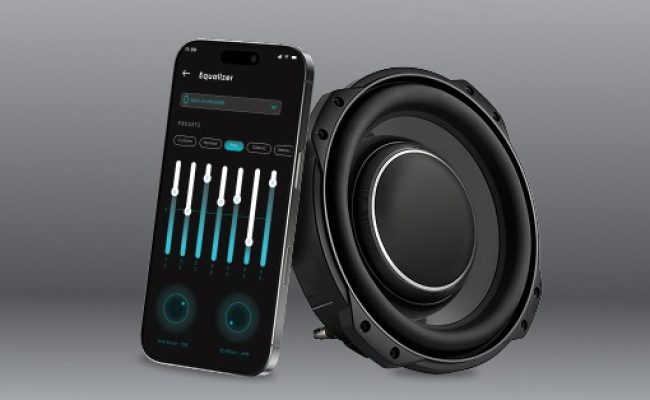
Our Client, a leading provider of high-end audio systems, needed to complement their advanced hardware with a powerful and intuitive user experience.

Application delivers a powerful user experience, within a clean and intuitive graphic interface. Once connected, application automatically recognizes DSP
We work with gaming hardware and consumer electronics companies to design and ship community platforms, companion apps, and peripheral software.

Transforming visions into digital reality with expert software development and innovation
© 2001-2026 Developex