Hiring mobile app developers in 2026 means navigating a global talent pool, a growing rate gap between regions, and a platform choice — iOS, Android, or cross-platform — that shapes the entire project. According to Fortune Business Insights, the global mobile application market was valued at $285.7 billion in 2025 and is projected to reach $322.6 billion in 2026, growing at 15.5% annually through 2033 — which keeps senior developer demand consistently ahead of supply.
iOS and Android are not interchangeable disciplines. They use different languages, different SDK ecosystems, and different release processes — and hiring decisions that treat them as equivalent often produce an expensive course correction six months in. Cross-platform frameworks change the economics further but introduce real trade-offs in hardware access and performance that matter most for IoT and connected device products.
In this post we will discuss what skills to look for when hiring iOS and Android developers, how rates compare across regions in 2026, which engagement model fits different project types, and what hardware-connected mobile development requires that most hiring guides do not cover.
1. iOS vs Android vs Cross-Platform: Understanding What You Are Actually Hiring For
Before writing a job description or opening a search, it is worth being precise about which mobile discipline your project requires. The three paths — native iOS, native Android, and cross-platform — are not equivalent in skills, tooling, or cost.
Native iOS development uses Swift (and Objective-C for legacy codebases) alongside Apple’s SDK: UIKit or SwiftUI for the interface, CoreBluetooth for BLE device communication, AVFoundation for audio and video, and StoreKit for in-app purchases. According to Rentamac’s June 2026 iOS statistics, approximately 22% of App Store submissions were rejected in 2025 — making App Review a real consideration in release planning. iOS holds 27% global OS market share but generates disproportionate revenue: the App Store earned $90.6 billion in 2025 versus Google Play’s $52.3 billion.
Native Android development uses Kotlin (and Java for older codebases) with Google’s SDK: the Android Bluetooth API for device communication, Gradle for builds, and the Play Console for release management. According to iQlance, Android controls approximately 72% of global OS market share and currently has over 6.3 million active developers globally versus approximately 3.1 million for iOS — which directly affects search timelines and talent availability.
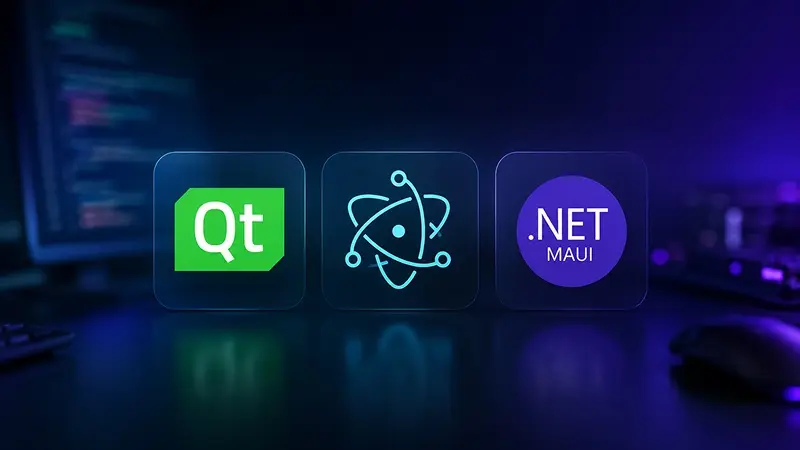
Cross-platform development using React Native and Flutter development allows a single codebase to target both iOS and Android, reducing cost and time-to-market at the expense of some native performance and platform integration depth. For projects where BLE or USB hardware communication is central — companion apps for IoT devices or consumer electronics — the trade-offs of cross-platform require specific evaluation before committing.
2. Key Skills to Look For When You Hire Mobile App Developers
The skills that distinguish a senior mobile developer from a capable mid-level one are not primarily about syntax — they are about judgment, architecture, and the ability to manage platform-specific constraints that only surface in production.
For iOS developers, the signals that distinguish experienced hires include:
- SwiftUI fluency. SwiftUI crossed from optional to expected in new iOS projects through 2025. Developers without production SwiftUI experience are at a disadvantage on any new build.
- Architecture pattern ownership. The ability to design and defend an architecture (MVVM, TCA, Clean Architecture) rather than implement one someone else defined.
- App Store release process. Experience managing App Store Connect, handling review rejections, managing signing certificates, and planning release cadences.
- Performance profiling. Real experience with Instruments, memory graph debugger, and energy impact analysis.
- Platform-specific APIs. Depth in what your product requires: CoreBluetooth for device-connected apps, AVFoundation for media, HealthKit for wellness, StoreKit for subscriptions.
For Android developers, the equivalent signals include Kotlin proficiency, experience with the Android Bluetooth APIs and BLE GATT profile management, and practical Play Console experience including staged rollouts and crash reporting through Android Vitals.
For cross-platform roles, the additional dimension is the ability to write and maintain platform channels — the bridge code between the framework and native platform APIs — which requires meaningful native iOS or Android knowledge alongside the framework itself.
3. Mobile App Developer Rates in 2026: Region-by-Region Comparison
According to Lemon.io’s 2026 mobile developer rate data, mobile app developer salaries range from $25 to $94 per hour across iOS, Android, React Native, and Flutter roles across six geographies. The widest split sits between senior US hires at a $74/hr median and Eastern European rates that start near $20/hr for junior iOS developers.
The table below reflects client-facing contractor and agency rates in USD, not local employment salaries.
| Region | Junior ($/hr) | Mid-Level ($/hr) | Senior ($/hr) | Notes |
| United States | $45–$70 | $72–$100 | $100–$155+ | Senior specialists regularly exceed $200K/yr total cost |
| Canada | $35–$55 | $57–$85 | $85–$130 | Toronto ecosystem strong for iOS consumer apps |
| Western Europe (UK, Germany) | $40–$65 | $65–$75 | $75–$120 | UK and Nordics at top end; Flutter popular in Germany |
| Eastern Europe (Poland, Romania) | $20–$35 | $35–$50 | $50–$65 | Mature ecosystem; growing SwiftUI and Kotlin depth |
| Ukraine | $20–$35 | $35–$48 | $48–$65 | Largest single-country senior mobile talent pool in Europe |
| India | $15–$25 | $25–$35 | $35–$52 | Largest volume; quality varies; strong React Native |
| Southeast Asia | $15–$25 | $25–$35 | $35–$48 | Growing Flutter capability |
| Latin America | $25–$40 | $40–$55 | $55–$72 | US time zone advantage; Brazil leads volume |
Sources: Lemon.io 2026 Rate Calculator; Second Talent Mobile App Cost Guide 2026; ZipRecruiter February 2026.
iOS Developer Rates
Freelance iOS developer rates start near $20/hr in Eastern Europe and climb past $96/hr at the US strong-senior level — a 4.8× spread for the same Swift codebase, according to Lemon.io’s iOS rate data. Hiring a senior iOS developer in Eastern Europe instead of the US cuts roughly $62,000 off annualized cost at 40 hours per week. Demand for senior iOS engineers in Eastern Europe is currently outpacing supply, pushing rates toward $55/hr at the upper end.
Android Developer Rates
Android senior rates in Eastern Europe average $35–$44/hr for strong senior talent. The savings gap versus US rates ($45–$82/hr) runs roughly $25,000–$60,000 per year per hire at equivalent seniority, per Lemon.io’s Android rate data. Strong senior rates continue to climb as companies compete for developers experienced with Kotlin Multiplatform and AI-driven in-app features.
Cross-Platform Developer Rates
Cross-platform developers — React Native and Flutter — typically cost 10–25% less than native iOS specialists at equivalent seniority, according to Second Talent’s 2026 cost guide. One cross-platform developer from Eastern Europe can cover both iOS and Android at $5,000–$8,700 per month — the primary cost argument for cross-platform where integration trade-offs are acceptable.
4. North America and Western Europe: When Local Rates Are Worth It
ZipRecruiter’s February 2026 data puts the average iOS and Android developer salary in the US at $142,000, with senior developers in New York and San Francisco regularly exceeding $200,000 with equity. Adding benefits, taxes, recruiting fees, and equipment, the total employment cost for a senior mobile developer in the US typically reaches $190,000–$280,000 per year.
Western Europe pays 15–25% less than the US. Glassdoor reports the average mobile developer salary in Germany at approximately €73,500 per year, with UK rates slightly higher driven by London’s fintech ecosystem.
Local hires make the most sense for projects that require deep regulatory familiarity — healthcare, fintech, enterprise compliance — or where in-person collaboration is a genuine requirement. For most execution-focused mobile development, the premium is harder to justify when comparable senior talent is available in Eastern Europe at 40–60% lower total cost.
5. Eastern Europe and Ukraine: The Depth Behind the Rate Advantage
Eastern Europe, and Ukraine specifically, has become the dominant source of senior mobile talent in the Lemon.io rate dataset — Ukraine accounts for the largest single-country concentration of senior mobile developers in the Europe and UK pool, with rates ranging from $23 to $70/hr depending on specialization and platform depth.
The rate advantage is real and persistent, but the more important point is that it is not a trade-off against quality. Ukraine produces over 30,000 ICT graduates annually. Senior Ukrainian iOS and Android developers have shipped consumer apps used by millions of users, work in English with direct client collaboration, and operate in a European time zone (UTC+2/+3) that provides full-day overlap with Western Europe and meaningful morning overlap with North American East Coast teams.
The practical consequence for hiring decisions: a senior iOS developer from a Ukrainian nearshore partner costs $38–$55/hr versus $100–$130/hr in the US, for a savings of roughly $62,000 per year per hire at 40 hours per week. For a team of three senior mobile developers, that differential exceeds $180,000 annually — enough to fund a meaningful portion of a product roadmap rather than staffing cost.
6. Hiring iOS Developers vs Hiring Android Developers: Key Differences
The iOS developer talent pool is smaller globally — approximately 3.1 million active iOS developers versus 6.3 million Android. This makes iOS specialist searches longer on average. When you hire dedicated iOS developers for hardware-connected products, platform API depth matters most: a generalist iOS developer without CoreBluetooth production experience will not reach the required level quickly enough.
Android developer searches benefit from a larger global talent pool, but the quality signal is harder to read. The practical difference is that Android work requires more extensive device testing infrastructure — Bluetooth fragmentation issues vary significantly across manufacturers and do not all appear on Pixel or Samsung Galaxy hardware.
For companies that want to hire dedicated mobile app developers covering both platforms, the most practical 2026 model is a cross-platform developer using Flutter or React Native, supplemented with a senior native specialist for features requiring deep platform integration. This costs less than two native developers while maintaining the quality ceiling where it matters most.
7. Hiring Mobile Developers for Hardware Products: BLE, IoT, and Companion Apps
Most hiring guides for mobile developers are written for consumer apps and SaaS products. Hardware-connected mobile development — companion apps for BLE devices, IoT sensors, gaming peripherals, wearables, and smart home products — requires a different evaluation framework, and the skills involved are genuinely scarce.
What Makes Hardware-Connected Mobile Development Different
A companion app for a BLE hardware device is not a standard mobile app with a Bluetooth API call. It requires understanding the GATT profile the firmware exposes — how connection parameters affect data throughput and power consumption, how to handle connection drops gracefully, and how to implement an OTA firmware update UX over BLE that does not brick the device when a user closes the app mid-transfer.
On iOS, this means real depth in CoreBluetooth: CBPeripheral, CBCentralManager, background scanning modes, and the iOS-specific restrictions on BLE scanning in background that frequently surprise developers who have only done BLE on Android. On Android, it means experience with the GATT callback model, MTU negotiation, and manufacturer-specific BLE quirks that vary across chipsets.
Skills Checklist for Hardware-Connected Mobile Developers
When you hire iOS app developers or Android developers specifically for hardware companion apps, extend the standard skills assessment with these questions:
- Have they designed or implemented a BLE GATT communication layer from scratch, or only used an existing layer someone else built?
- Can they describe how they would handle a BLE connection drop during an OTA firmware update — what happens to the device state, how the app detects the failure, and how the update resumes?
- What is their experience with CoreBluetooth background modes on iOS, and which background task type is appropriate for BLE device maintenance?
- How have they handled Android BLE fragmentation — how do they test across manufacturers, and which manufacturer-specific issues have they encountered?
- Have they worked on a project where firmware and app were developed by the same team versus separate vendors, and what did they learn?
The last question is particularly revealing. Developers from a combined firmware-and-app team understand the protocol design decisions that happen before either side writes production code — and why those decisions matter.
The Hardest Hire: iOS and Android Developers with BLE Expertise
A standard senior iOS or Android developer is already a scarce hire. A senior iOS or Android developer with production BLE experience is a significantly smaller subset of that pool. Searching specifically for an “iOS developer with BLE” or “Android Bluetooth developer” who has designed a GATT profile, implemented OTA firmware update UX, and shipped a hardware companion app to the App Store or Play Store narrows the candidate pool to a fraction of the already-thin senior mobile market. These engineers do not typically identify as “BLE developers” on their profiles — they are iOS developers or Android developers who happen to have hardware integration experience from specific roles. Finding them requires different sourcing than standard mobile hiring: referrals within the hardware ecosystem, embedded engineering communities, and partners who specialize in hardware-connected product development.
This scarcity has a direct consequence for timelines. A standard iOS developer search runs 6–10 weeks. A search specifically for an iOS developer with CoreBluetooth production experience and OTA firmware update implementation can run 3–6 months — or longer, depending on location and seniority. The same applies to Android Bluetooth developers: the combination of GATT profile knowledge, Android BLE API depth, and cross-manufacturer testing experience exists in a thin slice of the Android talent market. For companies building hardware companion apps on a fixed product timeline, this is where team augmentation with a specialized partner who already has these engineers on staff becomes less of a cost decision and more of a delivery-risk decision.
Why One-Team Delivery Matters for Hardware Products
The most consistent source of delays in hardware companion app projects is late-stage integration problems between firmware and the mobile app. The BLE GATT profile is defined by the firmware team, implemented by the app team, and the two meet in integration testing — at which point, changing the protocol requires coordinated changes on both sides, a new firmware build cycle, and potentially a new App Store submission. Iteration is slow.
The alternative is a model where firmware engineers and mobile app developers work within the same project, define the communication protocol together, and test end-to-end continuously.
8. Engagement Models: In-House, Freelance, or Dedicated Team
In-House Hire
Hiring mobile app developers in-house makes the most sense for products where mobile is a core, ongoing part of the business — not a one-time build. If your roadmap includes continuous mobile feature development for the next two or more years, the product knowledge and team integration that permanent developers build over time justifies the higher cost and longer time-to-hire. The practical constraint is search duration: senior iOS and Android developer searches typically run 6–10 weeks from posting to offer acceptance, longer for specialized roles with hardware platform experience.
Freelance or Contract
Freelance mobile developers are plentiful for standard consumer app work, and platforms like Toptal, Arc.dev, and Lemon.io have made vetting somewhat easier. The model works well for bounded projects with clear specifications and a defined delivery timeline. The risks: quality variance is high at the lower end of the market, hardware-specific freelancers are scarce, and managing a freelancer independently requires more oversight than most product teams expect. For hardware companion apps specifically, the freelance model adds coordination risk at exactly the point where coordination is most critical.
Dedicated Team Augmentation
Adding one or more mobile developers from a nearshore partner — working in your codebase, in your development process, and under your technical direction — is increasingly the practical choice for product companies that need consistent mobile capability but cannot fill senior roles fast enough or cost-effectively in-house. The engineers ramp faster than a direct hire because the partner has already vetted their skills and they have a defined onboarding process. The cost is typically 40–60% below equivalent in-house hiring in North America or Western Europe. And for hardware-connected apps, the option to include firmware engineers from the same partner in the project — as we do through our dedicated team model — is the most direct path to eliminating integration delays.
9. How Developex Approaches Mobile App Development
Developex has been building mobile applications since 2001, delivering iOS and Android apps for consumer electronics manufacturers, gaming peripheral brands, audio hardware companies, and teams that need wearable app development for connected devices. Our stack covers Swift and Objective-C for iOS, Java and Kotlin for Android, and Flutter, React Native, and Qt/QML for cross-platform projects.
For hardware companion apps — the core of our mobile work — we handle BLE GATT integration, CoreBluetooth on iOS, the Android Bluetooth API, OTA firmware update UX, and real-time device state sync. The model that works best for hardware clients is a combined team: firmware engineers and mobile developers in the same project, with the communication protocol defined jointly before either side writes production code. This eliminates the integration problems that surface late when firmware and app work are handled separately — and it is the single organizational decision that most consistently determines whether a hardware-connected app ships on schedule.
10. Summary: What the Data Tells You About Hiring Mobile Developers in 2026
The mobile developer market in 2026 is large, globally distributed, and more accessible than it was five years ago. The rate differences between US-based and Eastern European senior developers remain significant — $62,000 per year per iOS developer, up to $60,000 per Android developer — and those differences compound on multi-developer teams and multi-year programs.
The decisions that determine hiring outcomes are not primarily about rate. They are about platform specificity — knowing whether you need native iOS, native Android, or cross-platform before writing a job description. About seniority honesty — staffing entirely at mid-level to save on rate typically costs more in rework than it saves. And for hardware-connected products, about team structure — whether firmware and mobile engineers define the device communication protocol together, or discover its ambiguities during integration testing.
For hardware-adjacent hiring context, our embedded software developer rates for 2026 is worth reading alongside this one — firmware and mobile hiring decisions are often made together. If you are ready to discuss your requirements, reach out to our team.