Key Takeaway
A companion app is no longer an optional add-on for connected hardware — it now shapes onboarding, personalization, firmware delivery, diagnostics, ecosystem integration, and recurring revenue, making it as critical to the product experience as the device itself.
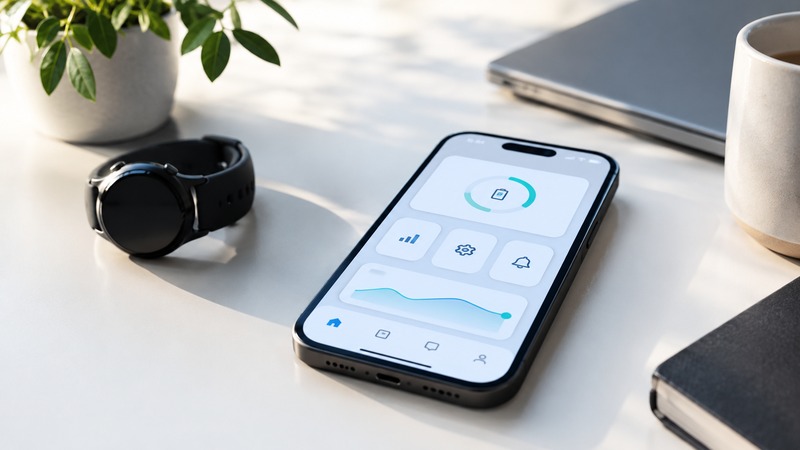
For connected hardware, a companion app has become a critical part of the product experience — not a bonus feature bolted on after the device ships, but the layer that determines whether a customer actually gets value from what they bought. A device that pairs unreliably, updates its firmware badly, or gives a user no way to see what it’s doing isn’t really a finished product in 2026, no matter how good the underlying hardware is.
The shift is structural, not cosmetic. Even Apple, a company that built its business on one-time hardware margins, launched an “Apple Upgrade” leasing program in 2026 that folds device ownership into an ongoing subscription — a signal that even the most hardware-centric companies now see the software and service layer as core to how a device generates value over its lifetime. Smaller hardware brands are following the same logic at a different scale: the app isn’t there to justify the purchase decision once, it’s there to keep justifying it every time the device is used.
What makes this shift concrete rather than abstract is that it plays out across a device’s entire life — from the first few minutes after unboxing to the recurring revenue a brand builds years later. Onboarding, personalization, firmware updates, diagnostics, data and insights, AI-driven features, ecosystem integration, retention, post-purchase engagement, and new revenue streams all reinforce each other, which is why a single piece of software has become as important to a hardware product as the device itself. In this post, we’ll discuss why hardware brands need a companion app in 2026, and what it costs a brand when one isn’t there to handle these moments.
1. The First Ten Minutes Decide Everything
Before a companion app does anything else, it has to get a device paired, configured, and working — and this single moment shapes the customer’s entire relationship with the product more than almost anything else that happens afterward. A device that connects on the first attempt, recognizes itself correctly, and walks a user through the two or three settings that actually matter creates a customer who trusts the brand from minute one. A device that fails to pair, times out during Bluetooth discovery, or dumps the user into a settings screen with no guidance creates a support ticket, a one-star review, or a return — often before the hardware itself has been given a fair chance.
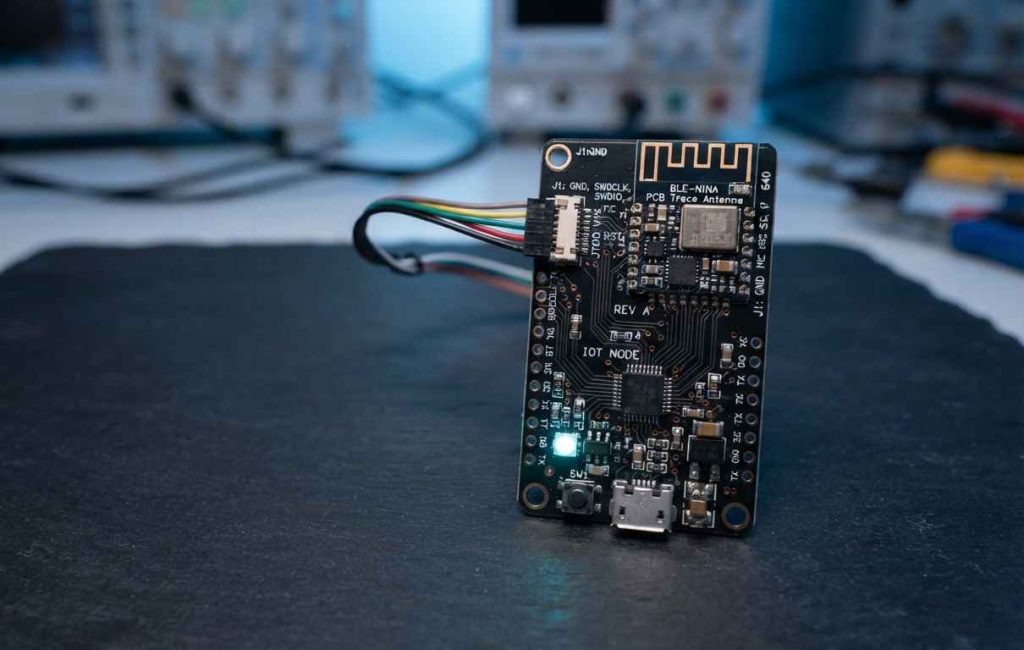
This is a harder engineering problem than it looks, particularly for BLE and Thread-based devices, where commissioning depends on the phone’s OS-level Bluetooth stack behaving consistently across manufacturers and firmware versions that the brand doesn’t control. A companion app that gets onboarding right typically detects failure states explicitly — a device that’s in the wrong pairing mode, a phone with Bluetooth permissions disabled, a firmware version mismatch — and tells the user specifically what to do next, rather than showing a generic “connection failed” message that leaves the user guessing. Getting this reliable across every device generation and every phone OS version a brand supports is exactly the kind of problem covered in more depth in Developex’s devices configuration and companion app development work, where onboarding reliability is treated as a first-class requirement rather than a happy-path demo.
2. Personalization and On-Device Intelligence
Once a device is set up, the companion app becomes the only place a customer can actually shape how the hardware behaves — and this is where a generic product starts to feel like it belongs to the person using it. The hardware itself is largely fixed at the point of sale; the app is what turns identical units into something that feels tailored, whether that means adjusting how a sensor interprets motion, how audio gets processed before it reaches a speaker driver, or which alerts a wearable surfaces and which it stays quiet about.
Manual personalization
Sliders, presets, and saved profiles that let a user directly shape device behavior without needing to understand what’s happening underneath.
Adaptive personalization
The app learns from usage patterns over time and adjusts defaults automatically, reducing the amount of manual tuning a user has to do to get a good experience.
Context-aware behavior
The device changes what it does based on signals like time of day, location, or activity, rather than requiring the user to switch modes manually.
On-device or edge AI processing
Increasingly used to keep personalization responsive and private, since sending every signal to the cloud for processing adds latency and raises data-handling questions a brand has to answer.
Cross-device personalization
Settings and learned preferences that follow a user across every device they own in a brand’s ecosystem, rather than resetting with each new purchase.
The common failure mode across all five is treating personalization as a static settings menu rather than something that evolves. A companion app that only offers fixed presets stays useful for a few weeks; one that gets progressively better at anticipating what a specific user wants is what actually earns daily engagement rather than being opened once during setup and then forgotten.
3. Firmware, Diagnostics, and Staying in Touch After the Sale
A device that ships with a bug, a security gap, or an underused capability used to be a fixed liability — the only fix was a recall or a product refresh. A companion app changes that completely, because firmware updates, diagnostics, and ongoing support all become things that happen continuously rather than at a single point in time. This is arguably the single biggest functional shift a companion app enables: hardware that was static for its entire life is now something a brand can keep improving for as long as the customer owns it.
Over-the-air firmware updates are the most visible part of this, but the harder engineering problem is making sure an update doesn’t strand a device mid-flash if the connection drops, doesn’t silently fail on older hardware revisions, and gives the customer visibility into what’s actually changing rather than an opaque “update available” prompt. Diagnostics work the same way in reverse — instead of a customer guessing why a device is behaving oddly and eventually giving up or returning it, a well-built companion app can surface the actual cause (a firmware mismatch, a sensor calibration drift, a low-battery threshold being hit early) and often resolve it without a support call at all.
Together, updates and diagnostics are also what post-purchase engagement looks like in practice — not a marketing newsletter, but a real reason to open the app again weeks or months after the sale: a changelog worth reading, a diagnostic result worth acting on, a capability the device didn’t have on day one. Getting this combination right — updates that don’t break things, diagnostics that catch problems early — is a large part of what Developex’s embedded and HMI development and cloud solutions work is built around: coordinating firmware, app, and backend so an update actually improves the device.
4. Turning Usage Into Insight
Every companion app that stays installed on a customer’s phone or desktop is, whether a brand thinks of it this way or not, a continuous research instrument. Every time a device reports its battery curve, which features get used and which get ignored, or how often a user hits an error state, the brand receives a dataset that no pre-launch focus group could realistically produce, because it reflects actual behavior across the full installed base rather than a small sample of self-reported opinions.
That data has two audiences, and a well-built companion app serves both. Internally, it tells product and engineering teams which features to invest in for the next hardware revision and which underused setting is quietly driving support tickets. Externally, the same underlying telemetry can become a feature the customer sees directly — usage trends, historical comparisons, or simple dashboards that turn raw sensor data into something the customer actually wants to check. Getting this right requires a backend that can ingest and query telemetry at scale without becoming a cost center of its own, which is the kind of infrastructure problem Developex’s cloud solutions work is built to solve.
5. Ecosystem Integration: Why the Device on Its Own Is No Longer the Whole Product
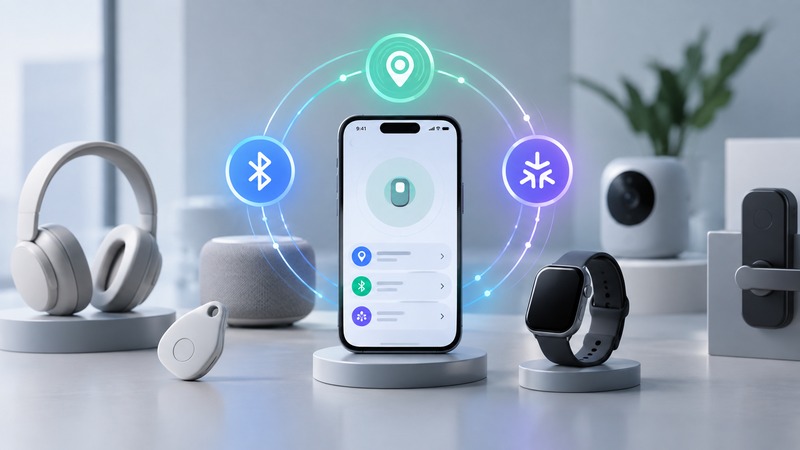
A single connected device rarely stays single for long — most hardware brands eventually sell a lineup, and a customer who owns three products expects one coherent experience, not three separate apps with three separate accounts and three design languages. Ecosystem integration is where a companion app either reinforces that expectation or actively works against it.
This is also where the app becomes a genuine distribution channel rather than just a utility. A companion app that’s already managing one device in a customer’s home or on their desk is the natural place to introduce the next product in the lineup, request a review at the right moment, or surface a firmware feature the customer didn’t know existed. None of that works if each device ships its own disconnected app — which is exactly the fragmentation problem covered in more depth in Developex’s piece on why IoT product lines need one unified software ecosystem, and in the technical architecture behind building unified companion apps across protocols and platforms.
6. From Retention to Recurring Revenue
The most durable case for a companion app is also the most commercial one: it turns a single hardware transaction into a relationship that keeps generating value — and revenue — for as long as the customer owns the device. The pattern researchers call the “fish model” describes this directly: revenue actually dips in the near term when a hardware brand shifts toward subscriptions and services, then climbs past the old one-time-sale baseline over the life of the customer relationship. That’s an uncomfortable trade for a team used to booking revenue at the point of sale, but it’s increasingly the trade brands are choosing to make.
Premium personalization tiers
Deeper customization, extended tuning options, or advanced modes gated behind a subscription rather than available to every user by default.
Custom presets and cloud-synced profiles
Settings a user has invested time tuning become a genuine switching cost, since abandoning the hardware means abandoning the customization too.
Cloud-connected features
Sync, backup, and remote access that depend on ongoing infrastructure rather than a one-time purchase, which naturally maps to a recurring fee.
Freemium gating done carefully
2026 subscription benchmarks consistently show hard paywalls outconverting freemium in the first weeks after install, which makes exactly where a brand draws the free-to-paid line a genuinely high-stakes product decision, not an afterthought.
New feature delivery
A subscription that keeps paying for itself because the app keeps shipping capabilities the hardware didn’t have on day one, rather than a subscription that locks static functionality behind a paywall.
Getting this right requires the app’s architecture to support tiered access, entitlement checks, and usage tracking from the start — retrofitting a subscription model onto an app that was never built for it is a considerably bigger project than adding it during the original build. Developex’s work on gaming and consumer electronics configuration software and companion apps for audio devices has involved exactly this kind of tiered feature architecture — building the personalization, presets, and cloud layers so that a subscription model can be layered on cleanly rather than bolted on after the fact.
7. At a Glance: What Changes With a Companion App
The table below recaps every moment covered in this article, side by side with what happens when a brand skips it.
| Moment | Without a Companion App | With One |
|---|---|---|
| Onboarding & setup | ✕ Generic pairing errors, manual troubleshooting, early returns | ✓ Guided setup with device-specific failure detection |
| Personalization | ✕ Fixed factory defaults for every user | ✓ Adaptive settings that improve with usage |
| Firmware updates | ✕ Manual, rare, or nonexistent — bugs ship permanently | ✓ Continuous OTA delivery, issues fixed post-sale |
| Device diagnostics | ✕ Customer guesses, then calls support or returns the device | ✓ App surfaces the likely cause and often self-resolves it |
| Data & insights | ✕ No visibility into real-world usage patterns | ✓ Aggregated telemetry informs the next hardware revision |
| AI-powered features | ✕ Static behavior regardless of context | ✓ Context-aware adjustments based on real usage signals |
| Ecosystem integration | ✕ Each device is an island with its own app | ✓ One account, one interface, cross-device consistency |
| Customer retention | ✕ No reason to re-engage after initial setup | ✓ Ongoing utility keeps the app — and the brand — top of mind |
| Post-purchase engagement | ✕ Relationship ends at checkout | ✓ Software updates and features extend the relationship indefinitely |
| New revenue opportunities | ✕ One hardware margin, once | ✓ Subscriptions, tiers, and add-ons generate ongoing revenue |
8. Developex’s Expertise in Companion App Development
Building a companion app that elevates hardware requires a balance of deep low-level engineering and modern software architecture. Developex brings extensive, hands-on experience in building companion mobile & desktop applications that bridge the gap between physical devices and digital ecosystems.
Our Core Competencies for Hardware Brands
- Robust Connectivity & Onboarding: Extensive expertise in BLE, Wi-Fi, Thread, and custom protocol stacks to guarantee rock-solid pairing, cross-platform stability (iOS, Android, Windows, macOS), and instant failure-state recovery.
- Firmware & Embedded Integration: Seamless coordination through firmware & embedded development, Over-the-Air (OTA) update pipelines, and real-time hardware diagnostics to keep connected hardware reliable long after purchase.
- Unified Ecosystem Architecture: Designing scalable frameworks for end-to-end device ecosystem development to manage multi-device product lines, eliminate software fragmentation, and deliver consistent cross-device user experiences.
- Cloud Infrastructure & Telemetry Pipelines: Leveraging specialized cloud solutions and backend APIs to ingest device analytics at scale, power context-aware features, and turn raw sensor telemetry into meaningful user insights.
- Subscription & Entitlement Frameworks: Architecting flexible software foundations within software development for the electronics industry that cleanly support freemium tiers, cloud-synced profiles, and recurring revenue models without compromising the core hardware experience.
From audio equipment and gaming peripherals to smart home devices and industrial wearables, Developex helps hardware brands transform standalone products into scalable, software-driven ecosystems.
9. Frequently Asked Questions
TL;DR
A companion app now covers ten distinct moments in a device’s life — onboarding, personalization, firmware updates, diagnostics, data and insights, AI-powered features, ecosystem integration, retention, post-purchase engagement, and revenue.
Onboarding failures and unreliable firmware updates are avoidable engineering problems, not inherent limits of connected hardware.
Recurring revenue through a companion app works best when tiered access and subscription entitlements are part of the original app architecture, not added after launch.
Ecosystem integration turns a companion app into a distribution channel for a brand’s full product lineup, not just a utility for one device.
Conclusion
A companion app used to be a convenience — something that made a device slightly easier to configure. In 2026, it’s the mechanism that determines whether onboarding succeeds, whether firmware stays current, and whether a single sale turns into a years-long relationship. None of the moments covered in this article are optional for hardware that wants to compete in 2026 — they’re the product experience now, not an accessory to it.
If you’re scoping a companion app for your next hardware product, or evaluating whether your existing app is doing enough of this work, get in touch with Developex to talk through what your device’s software layer actually needs to do.